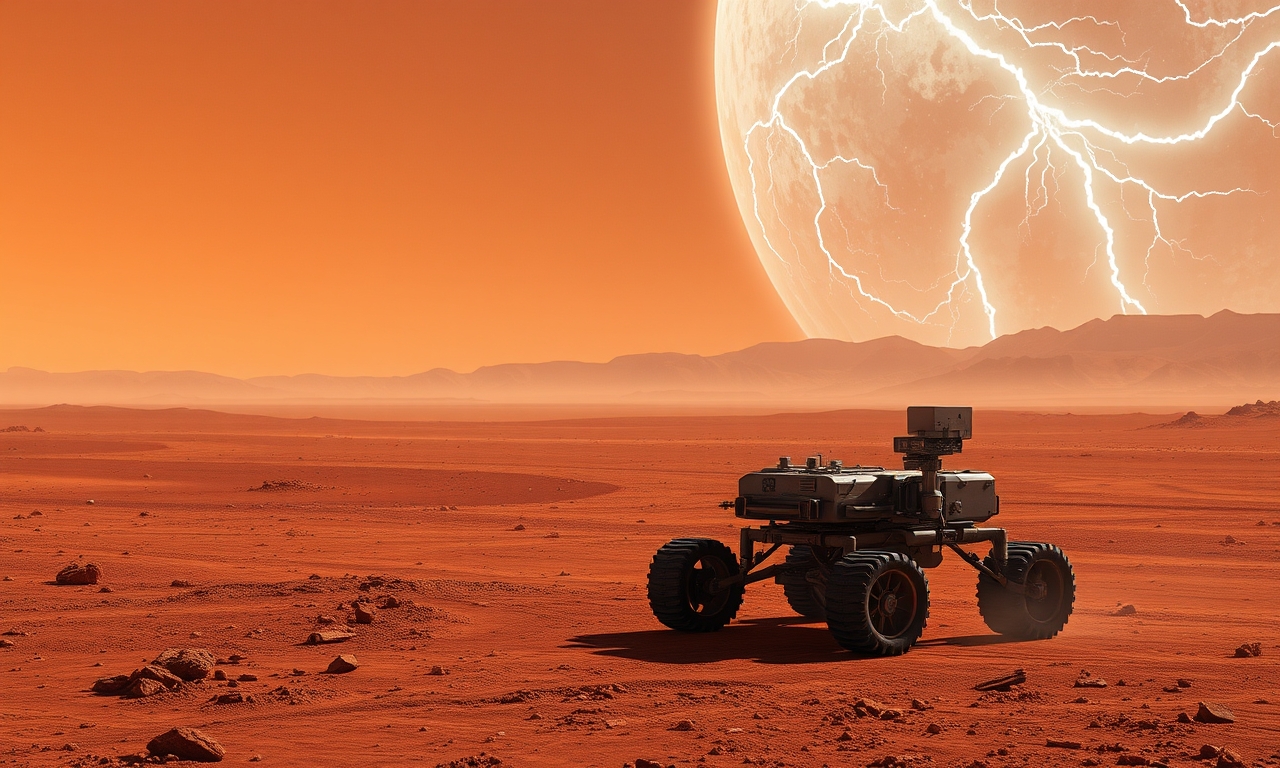
Study examines electrostatic hazards of Martian dust storms
A doctoral researcher at the University of Alabama in Huntsville has published findings in the Planetary Science Journal suggesting that extensive dust storms on Mars can segment the atmosphere into zones with heightened electrical activity. This segmentation may increase the frequency of electrostatic discharges.
Chali Idosa Uga, a third‑year Ph.D. candidate in the Department of Space Science, explains that turbulent dust motion during global storms separates electrical charges and generates strong electric fields. Such fields could disrupt spacecraft electronics, cause arcing between conductive components, or damage delicate scientific instruments.
The paper identifies three primary risks: interference with electronic systems due to unexpected discharges, the formation of arcs that could physically damage hardware, and degradation of exposed scientific payloads. These effects could shorten mission lifetimes or lead to data loss.
The author recommends that future Mars missions reassess shielding and grounding strategies, incorporate insulating materials, and consider redundant electronics to mitigate electrostatic threats. Operational planning might also avoid surface activities during periods of intense dust activity.
Overall, the research adds to the growing knowledge of Martian environmental hazards and provides actionable guidance for the design of spacecraft slated for the Red Planet in the coming decades.