Exceptional Radio Burst Detected
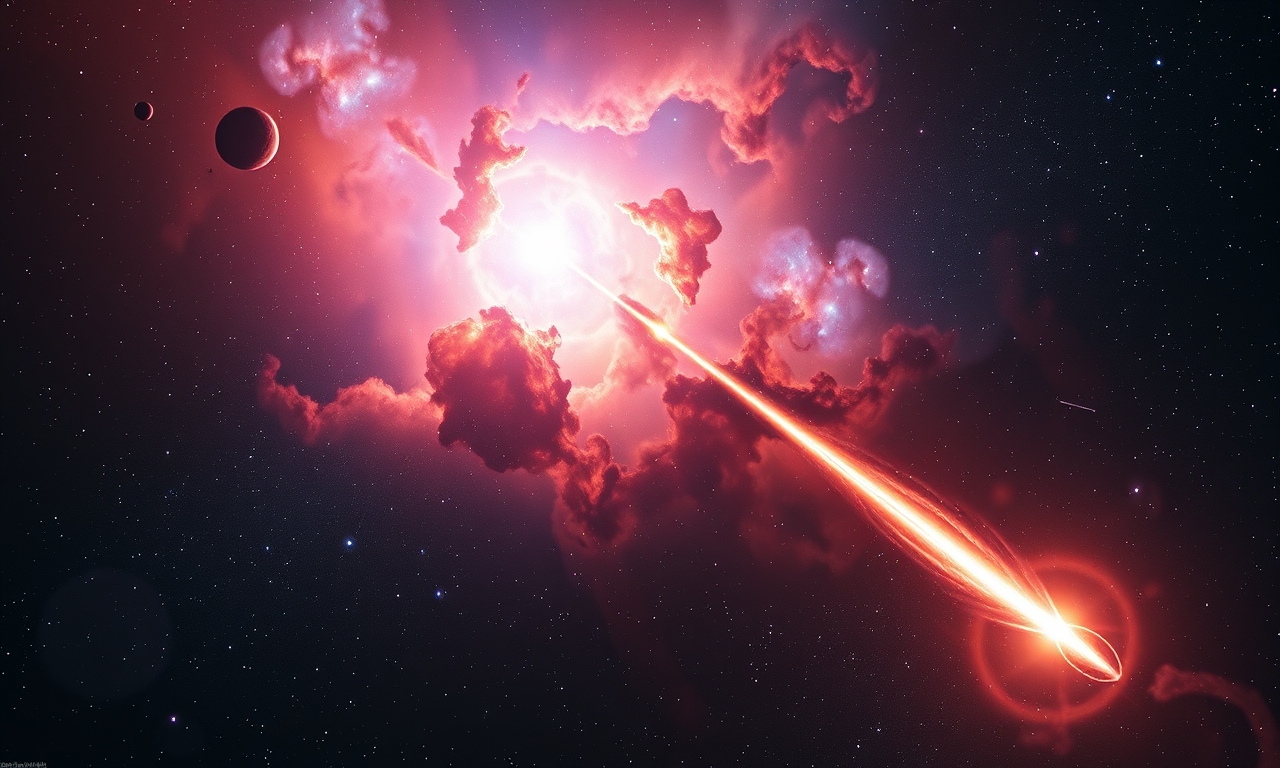
The National Science Foundation's Very Large Array captured a bright flash of radio emission originating from an unusual cosmic phenomenon. The event involves a star being ripped apart by an intermediate‑mass black hole, an object whose mass lies between typical stellar and supermassive black holes.
Off‑Axis Jet Afterglow
Data analysis indicates that the signal corresponds to the afterglow of a strong jet that is not pointed directly toward Earth. Such jets are produced when infalling material near the event horizon releases vast amounts of energy. Because the jet is oriented sideways relative to our line of sight, it appears as a fainter but still detectable radio source.
Implications for Black‑Hole Studies
This observation adds a valuable data point to the scarce sample of known intermediate‑mass black holes. Detecting an off‑axis jet demonstrates that these objects can generate high‑energy outbursts comparable to those seen from supermassive black holes.
Publication and Future Work
The findings have been published in The Astrophysical Journal Letters. Ongoing monitoring with the VLA and complementary observatories will aim to determine how often such tidal‑disruption events occur and what role they play in the galaxy‑scale energy budget.