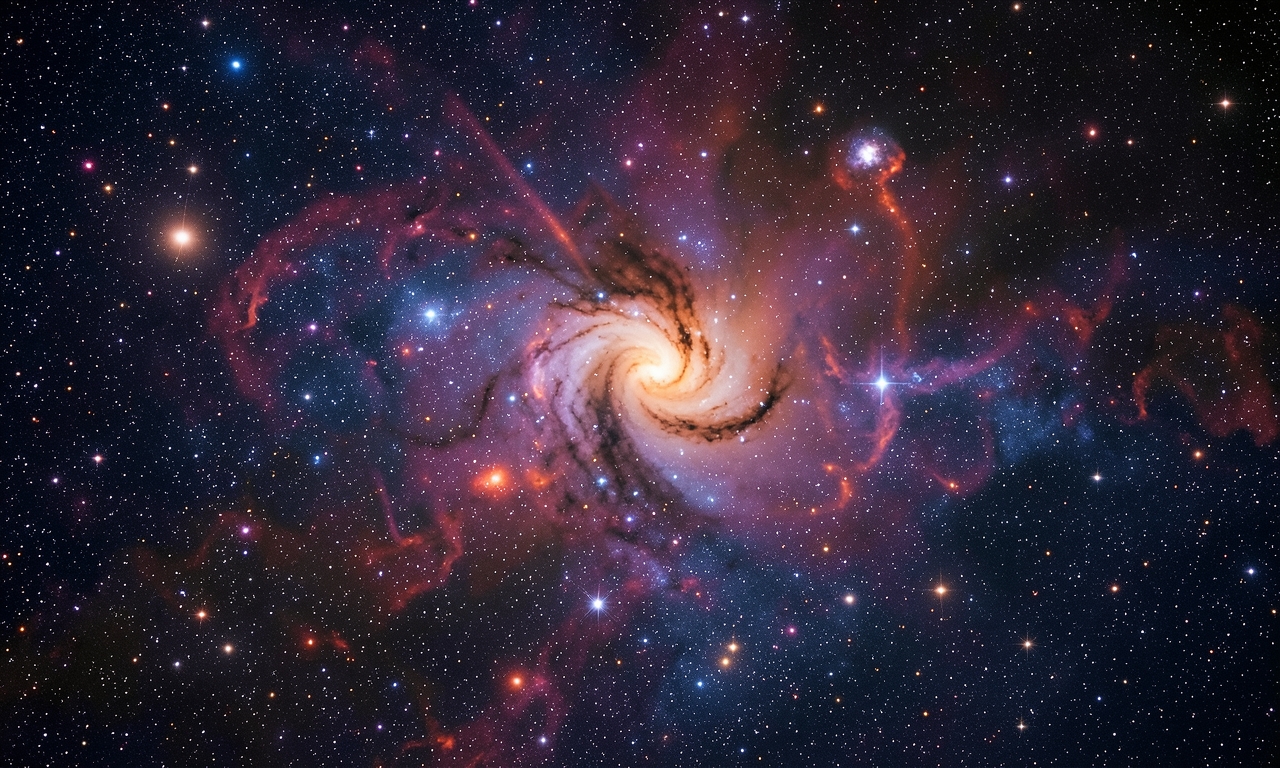
First observations from the X‑Ray Imaging and Spectroscopy Mission (XRISM) have provided new insight into why the most massive galaxies in the cosmos contain unexpectedly few stars.
The investigation focuses on active‑galactic‑nucleus (AGN) feedback, where intense radiation and particle outflows from a supermassive black hole interact with the surrounding gas. XRISM’s high‑resolution spectroscopy allows precise measurements of the temperature, density and velocity of this hot plasma.
Initial findings reveal that the high‑energy winds emanating from the black hole heat and displace the interstellar medium. The resulting increase in gas temperature prevents it from collapsing under gravity, effectively shutting down new star formation.
This result fills a gap in galaxy‑evolution models that have struggled to account for the star‑formation deficit in the largest galaxies. Ongoing XRISM observations will aim to determine how common these feedback episodes are and over what timescales they operate.