Science & Research

How Long Can Plants Survive on Earth? New Model Suggests Up to Two Billion More Years

1 min read
How Long Can Plants Survive on Earth? New Model Suggests Up to Two Billion More Years
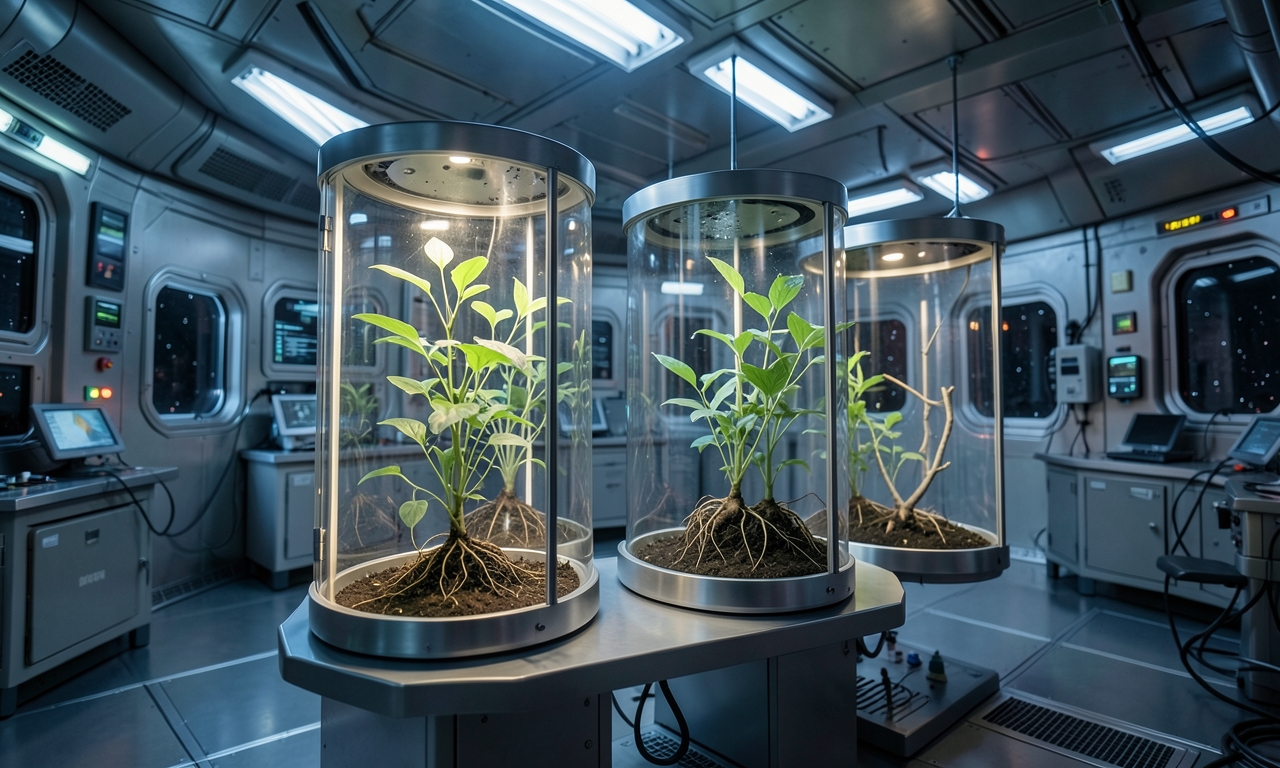
AI-generated illustration
This article was produced with AI assistance and editorially curated from public sources.

Long‑Term Prospects for Plant Life on Earth

A recent modeling study suggests that Earth’s plant biosphere could endure for roughly another two billion years before changing environmental conditions terminate it.

The driving factor is the Sun’s increasing luminosity, which grows by about ten percent every billion years. This gradual rise in solar output leads to a slow warming of the planet’s surface, altering climate over geological timescales.

Researchers coupled future solar‑radiation trajectories with climate models to estimate when average temperatures would exceed thresholds that impede photosynthesis for many terrestrial plants. Their calculations include feedbacks such as enhanced water evaporation and shifts in the greenhouse effect.

While the estimate provides a generous upper bound, the authors note that additional influences—such as anthropogenic climate change or rare astronomical events—could bring the endpoint sooner. Consequently, the model should be viewed as a maximum possible lifespan for plant life rather than a precise prediction.

Frequently asked questions

Wie lange könnten Pflanzen laut dem neuen Modell noch auf der Erde überleben?

Das Modell schätzt eine mögliche Überlebensdauer von bis zu zwei Milliarden Jahren, bevor steigende Sonnenstrahlung die Bedingungen für die Photosynthese unbrauchbar macht.

Welcher Faktor bestimmt laut der Studie die langfristige Zukunft des Pflanzenlebens?

Die zunehmende Helligkeit der Sonne, die ihre Energieausgabe etwa alle Milliarde Jahre um zehn Prozent steigert, treibt die Erwärmung der Erdoberfläche und damit die Lebensbedingungen für Pflanzen.

Können andere Einflüsse die prognostizierte Grenze verändern?

Ja, zusätzliche Faktoren wie menschengemachte Klimaänderungen oder außergewöhnliche astronomische Ereignisse könnten das Ende des pflanzlichen Lebens früher eintreten lassen als das Modell vorgibt.