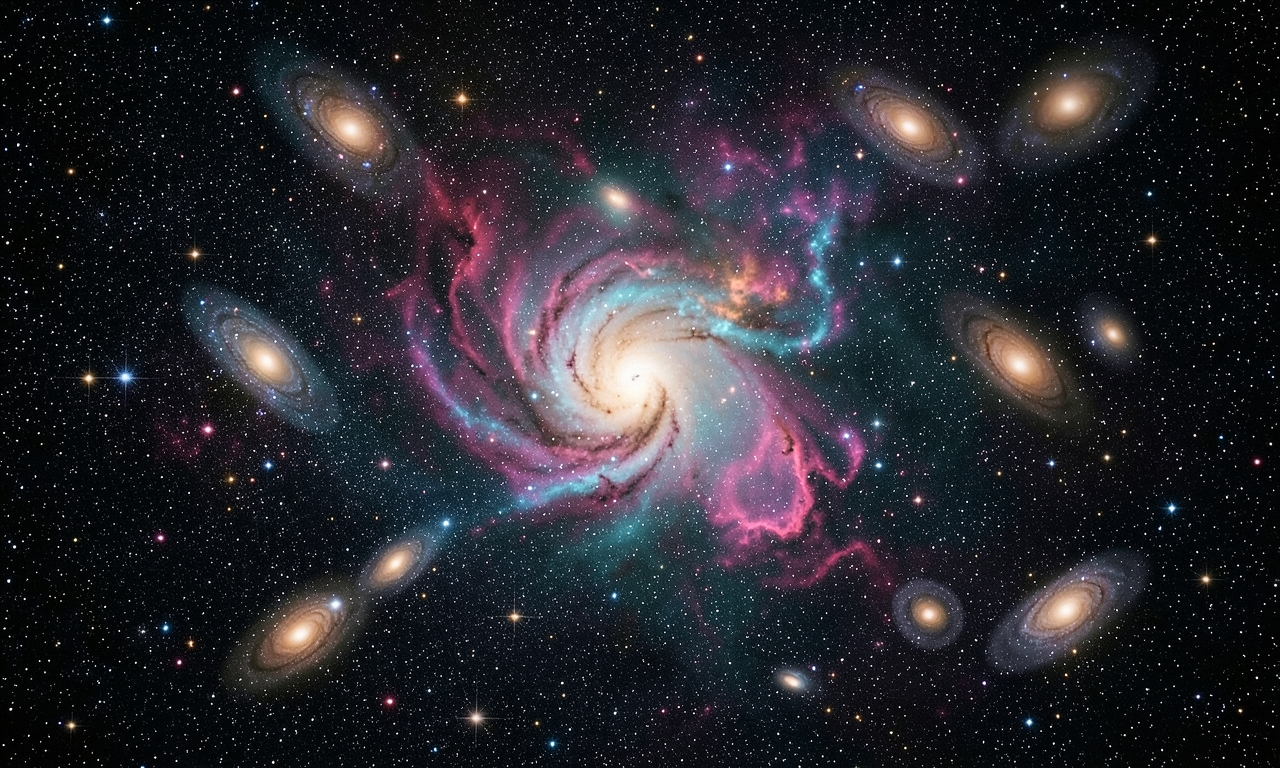
A dazzling glimpse into the Milky Way's core
The Hubble Space Telescope, operated jointly by NASA and ESA, has delivered a high‑resolution photograph of a distant globular cluster. This tightly bound stellar system contains tens of thousands to millions of stars held together by gravity.
Bright, old stars dominate the scene, outshining younger members and giving the cluster the appearance of a glittering chandelier, a nickname that quickly caught public attention.
Insights into early galactic history
Globular clusters are among the oldest structures in the Milky Way, with ages approaching 13 billion years. Formed shortly after the galaxy itself, they serve as fossil records of the early stages of galactic evolution.
While more than 150 globular clusters have been identified in our galaxy, the exact count remains uncertain because many lie in densely populated regions near the galactic center.
Scientific relevance
Studying these clusters allows astronomers to probe stellar chemistry, age distributions, and dynamical behavior of ancient star populations. The observations also inform models of dark‑matter distribution within galaxies.
Beyond its visual appeal, the new Hubble image contributes valuable data that deepen our understanding of the Milky Way’s structure and formation history.