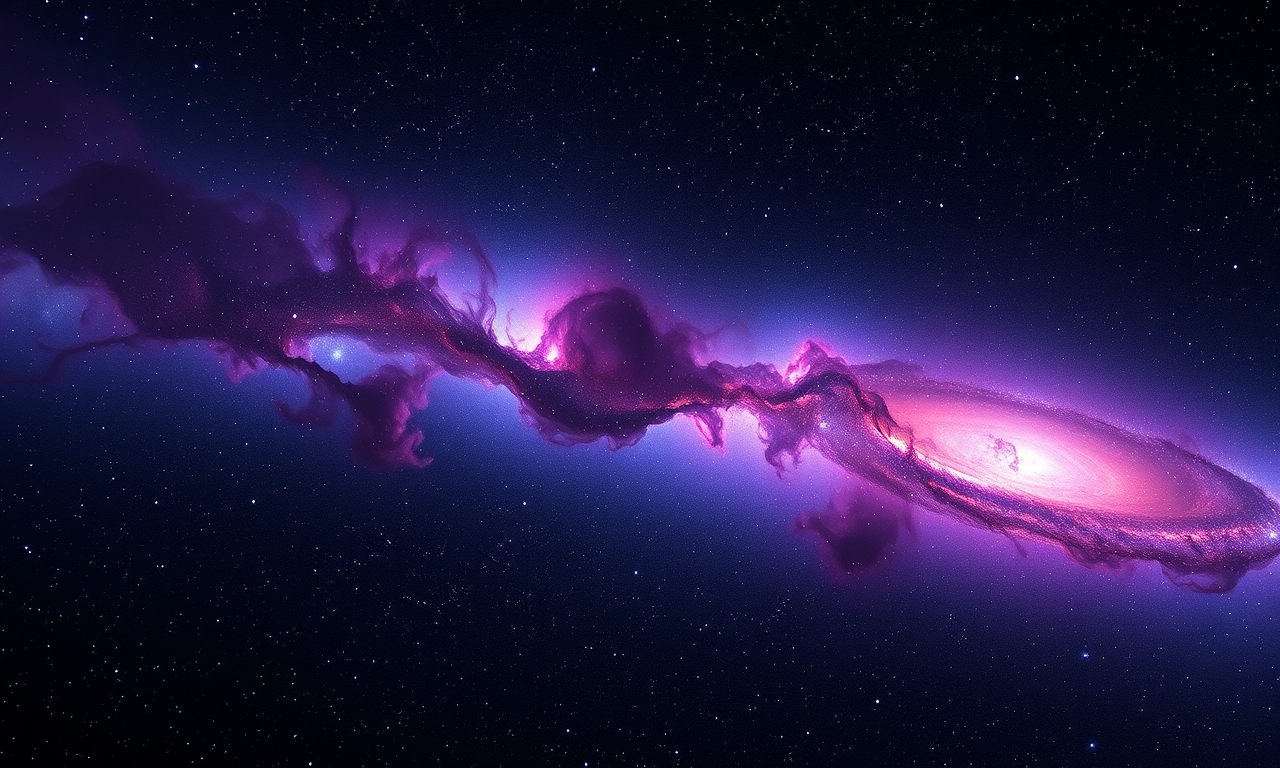
The Hubble Space Telescope has once again demonstrated its ability to capture the faintest and most distant objects in the cosmos. In a recent observation, astronomers measured ultraviolet emission from a galaxy whose light has traveled for over 13 billion years to reach us.
According to the data, the galaxy existed approximately 1.4 billion years after the Big Bang, a period when the universe was still in its infancy. The detected UV light originates from hot, young stars that were forming vigorously during this early epoch.
The finding came as a surprise to the research team, because prevailing models of galaxy formation had predicted that such systems would be comparatively faint and difficult to detect in the ultraviolet range at this early stage. The result suggests that star formation in certain regions of the young universe may have proceeded more efficiently than previously thought.
Future observations with next‑generation facilities could refine our knowledge of the physical conditions in these early galaxies and improve models of cosmic reionization.