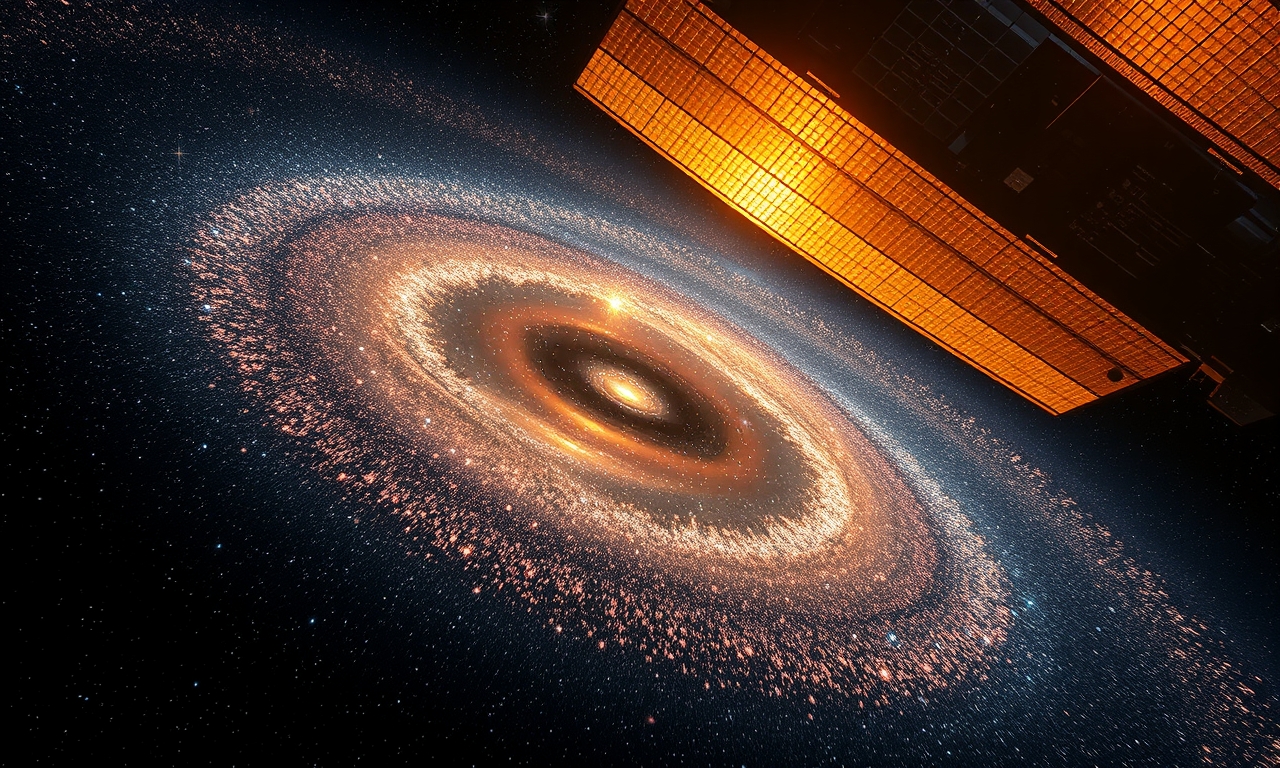
A Window into the Cosmic Depths
Recent observations by the Hubble Space Telescope have produced a high-resolution image of the galaxy cluster MACS0329-0211. The photograph displays a multitude of galaxies arranged in a pattern reminiscent of a bee swarm. This configuration reflects the gravitational interactions and dynamic evolution occurring within the cluster.
Formation of a Galaxy Cluster
Galaxy clusters form over billions of years as matter coalesces under gravity. The cluster MACS0329-0211 illustrates this process, where multiple galaxies, gas clouds, and dark matter merge into a complex structure. The observed patterns suggest an active phase of galactic development.
The Role of Hubble
Since its launch in 1990, the Hubble Space Telescope has delivered high-resolution images of distant cosmic objects. By combining optical and infrared observations, Hubble can precisely map the composition and motion of galaxies. The current image of MACS0329-0211 leverages these capabilities to chart the universe’s structure.
Looking Ahead
The data from this image are being used by astronomers to refine models of galaxy evolution and to better understand the role of dark matter. Upcoming missions, such as the James Webb Space Telescope, will provide further insights into similar structures.