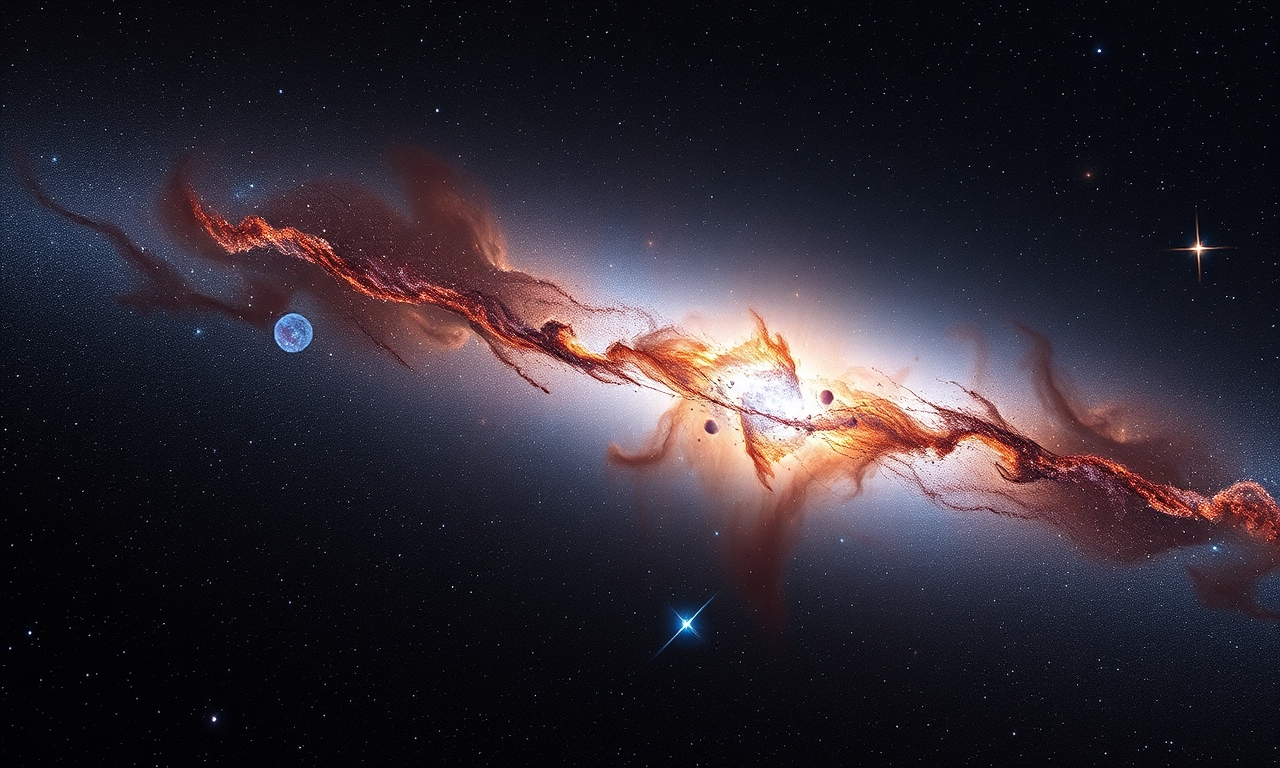
The Hubble Space Telescope has delivered a striking image of the globular cluster Messier 3 (M3). Located in the constellation Hydra, this cluster ranks among the largest known stellar assemblies in our galaxy.
Window into an Ancient Stellar System
Messier 3 contains several hundred thousand stars that formed roughly at the same epoch from a single gas cloud. These stars are extremely old—often billions of years—and provide insight into the early stages of galaxy formation.
Structure and Composition
The Hubble view shows a nearly spherical shape with a dense core surrounded by a more diffuse outer halo. The stellar population exhibits a relatively uniform chemical makeup, a hallmark of globular clusters.
Scientific Relevance
The telescope’s high resolution enables astronomers to resolve individual stars in the crowded core, something impossible with ground‑based observatories. These observations help refine models of stellar evolution and the dynamical behavior of dense star systems.
Future Observations
Continued monitoring with Hubble and upcoming facilities such as the James Webb Space Telescope will aim to characterize M3’s physical parameters in greater detail and compare them with other globular clusters.