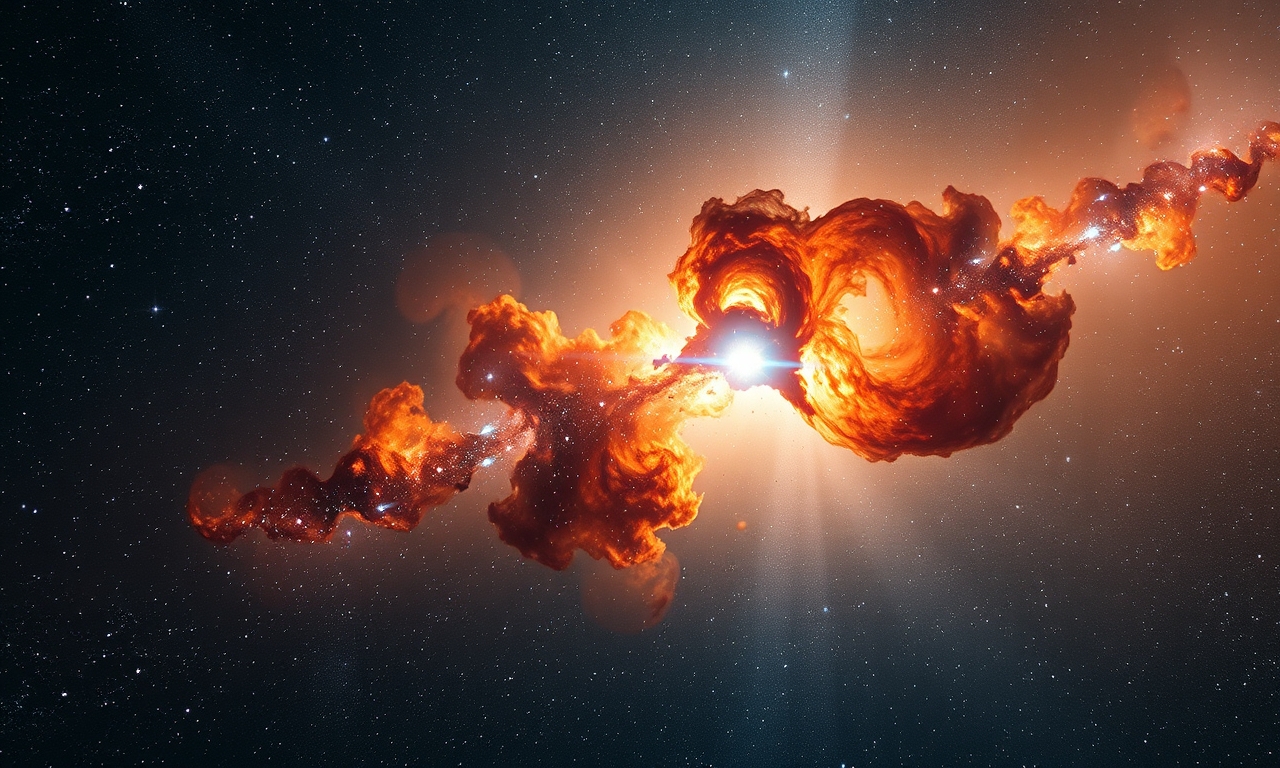
Examining an ancient stellar system
The Hubble Space Telescope, operated jointly by NASA and ESA, has produced a high‑resolution view of one of the Milky Way’s oldest globular clusters. These dense stellar assemblies contain tens of thousands to millions of stars bound together by gravity.
Evidence of two star‑formation episodes
The image highlights that the cluster, commonly referred to as the “Chandelier Cluster,” underwent two separate bursts of star formation. Each brief, intense episode left a lasting imprint on the cluster’s current structure.
Globular clusters across our galaxy
More than 150 globular clusters have been identified within the Milky Way. Astronomers suspect additional clusters remain hidden, obscured by interstellar dust or crowded stellar fields.
Implications for astrophysics
Observing star‑formation bursts in such an ancient environment provides valuable insight into how stars form under extreme gravitational conditions and informs models of galactic evolution over billions of years.