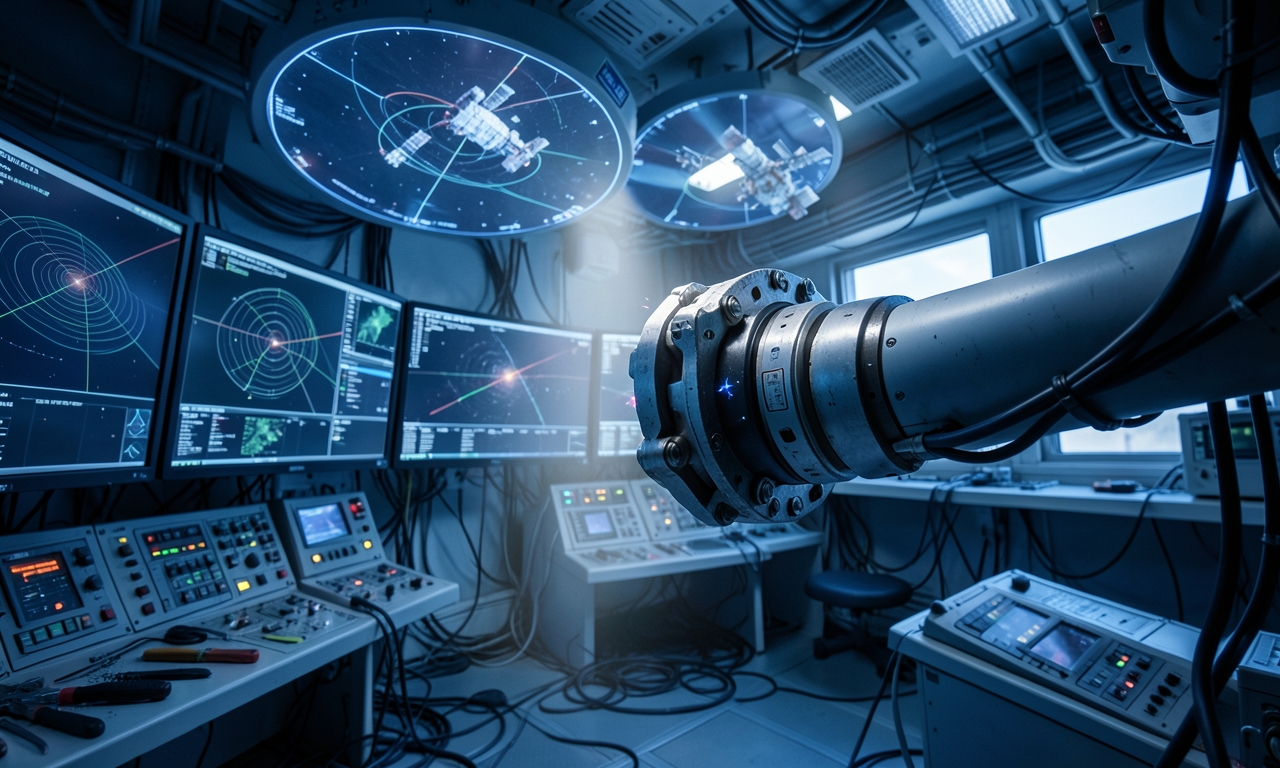
Abnormal current draw detected in Canadian robot arm joint
On 27 May, flight controllers at NASA’s Johnson Space Center in Houston observed that one of the seven joints of the Canadian‑manufactured robotic arm on the International Space Station was consuming more electrical power than normal and was not moving as expected.
The anomaly was immediately relayed to the station crew, who initiated a series of diagnostic and maintenance procedures. Astronauts performed an “operation” using manual tools and spare components to stabilize the malfunctioning joint.
The robotic arm, a critical asset for external payload handling and station upkeep, relies on all joints functioning correctly. By employing onboard spare parts and real‑time telemetry, the crew was able to bring the current draw back within nominal limits.
Following the repair, mission control confirmed that the joint now operates within its specified parameters, allowing the arm to resume scheduled external activities and scientific experiments.
This incident underscores the importance of continuous system monitoring and rapid response capabilities for complex space hardware. Further analysis will determine whether the issue was isolated or indicative of longer‑term wear.