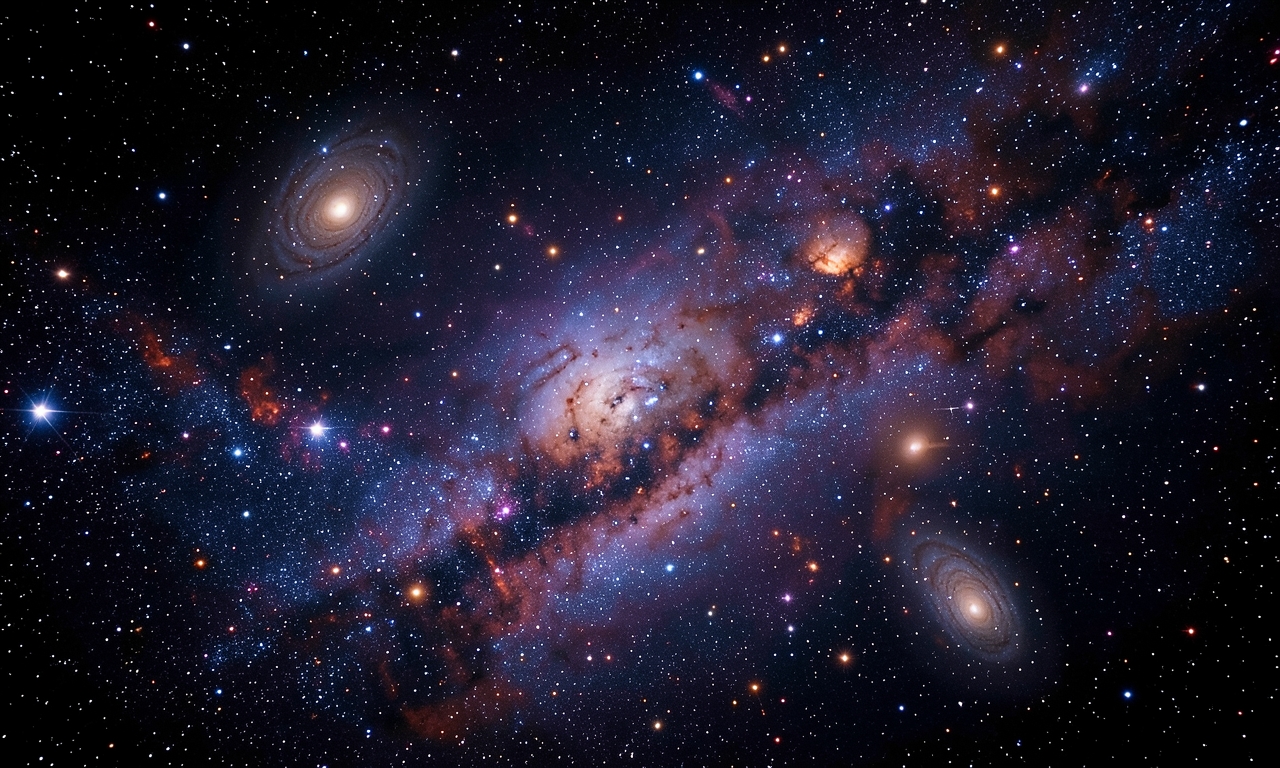
Surprising discovery from the cosmic noon epoch
Utilising the James Webb Space Telescope (JWST), an international team of astronomers has detected an exceptionally massive and tightly packed galaxy cluster that formed during the period known as "cosmic noon"—approximately three to four billion years after the Big Bang, when star formation activity peaked.
Structural characteristics of the cluster
The observed cluster exhibits a density and total mass previously attributed only to much later cosmic structures. Infrared imaging reveals that galaxies were already closely grouped and merged into a substantial concentration at this early stage, posing a challenge to hierarchical formation theories.
Observational method and data
The discovery relies on JWST’s infrared capabilities, which allow detection of faint, distant objects. Spectroscopic analysis enabled the team to determine the cluster’s age and distance, confirming its placement within the cosmic noon timeframe.
Implications for cosmology
These findings suggest that massive structures assembled more rapidly and efficiently in the early universe than current models predict. Theoretical frameworks will need revision to accommodate the early emergence of such dense galaxy clusters. Additional JWST observations are scheduled to assess how common these objects are.