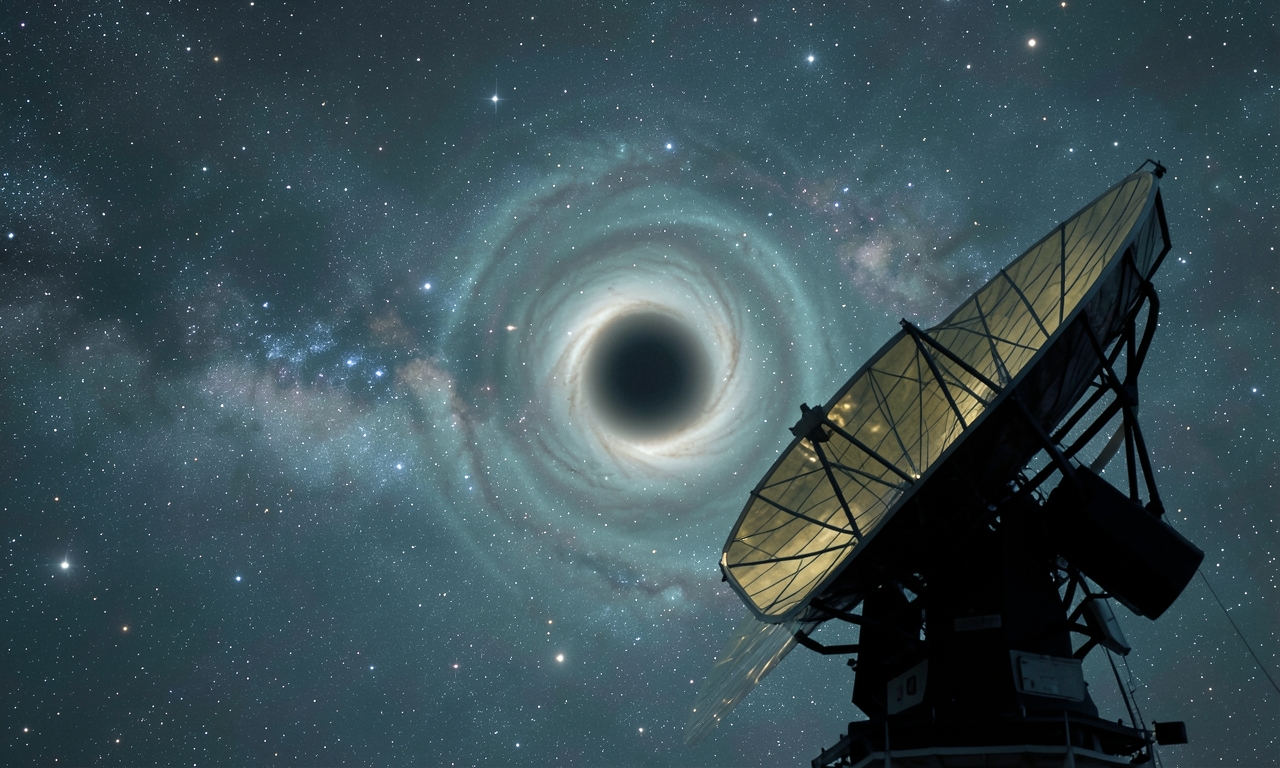
Using the James Webb Space Telescope and Einstein's theory, astronomers have measured a dormant supermassive black hole located 10 billion light-years from Earth. The results reveal the sleeping giant has a mass 6 billion times that of the Sun, offering new insights into these enigmatic objects.
Supermassive black holes typically emit intense radiation when active, but this particular one has been inactive for billions of years. Researchers used the telescope's infrared capabilities to observe the light-bending effects caused by the black hole's gravity on nearby stars. This phenomenon, known as gravitational lensing, allowed precise mass calculations.
The black hole's light now reaching Earth after traveling for approximately 4 billion years provides a glimpse into the early universe. The findings contribute to understanding how galaxies and their central black holes evolved over cosmic time.
The study demonstrates the telescope's effectiveness in studying distant, dormant black holes. These observations help refine models of galactic formation and the role of supermassive black holes in cosmic evolution.