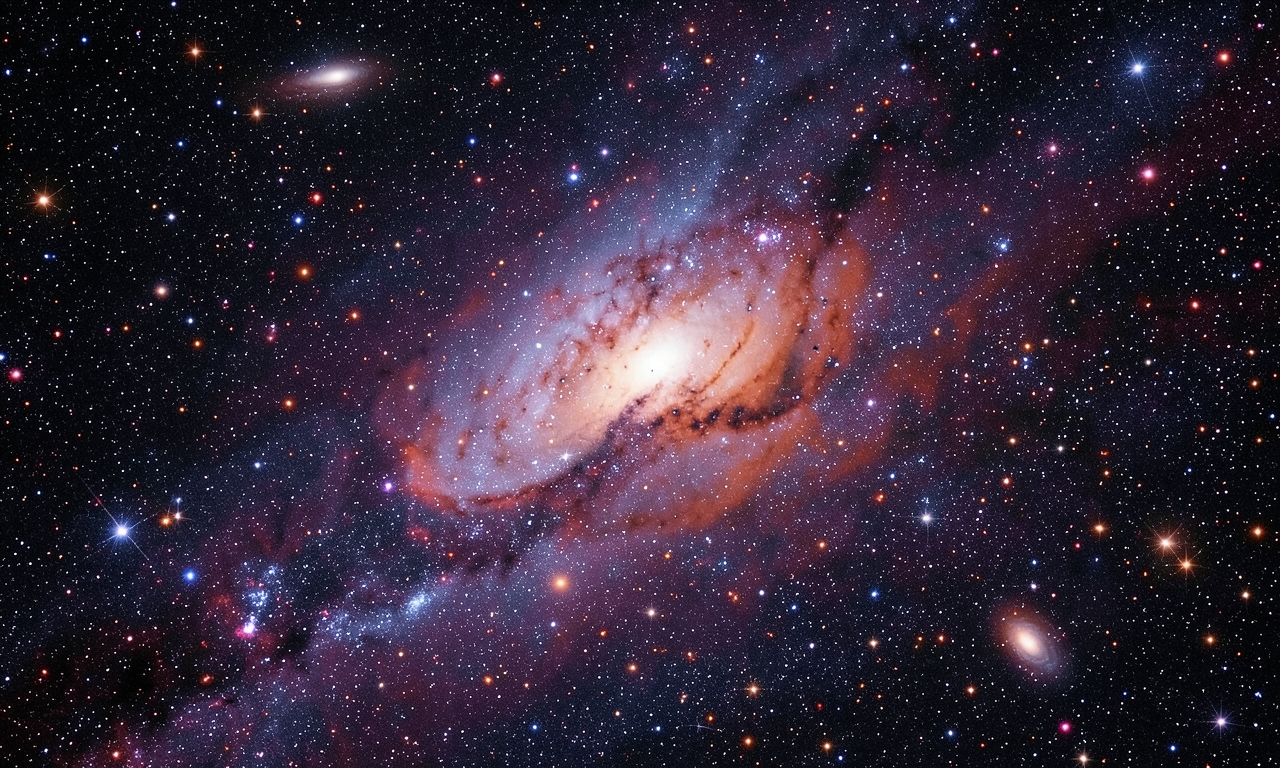
Discovery of the Red Dots
The James Webb Space Telescope has uncovered numerous faint, reddish objects since the start of its observations, nicknamed Little Red Dots. Their identity remained puzzling because they do not clearly match typical galaxies or known star clusters.
Simulations on ATERUI III
Researchers used the Japanese supercomputer ATERUI III to trace millions of particles and recreate conditions in the young universe. The results indicate that the observed dots can be interpreted as fast‑growing black holes whose mass increased dramatically within a few hundred million years.
Why Only in the Early Universe?
During the first billion years after the Big Bang, gas density and the amount of freely moving material were far higher than today. This allowed black holes to accrete matter at rates that are now suppressed by radiation pressure and other feedback effects in the present‑day universe.
Outlook
The simulations rely on standard astrophysical physics and do not require exotic particles or unusual models. Future JWST observations and refined simulations will test whether the Little Red Dots truly represent early black holes and how they influenced the formation of the first galaxies.