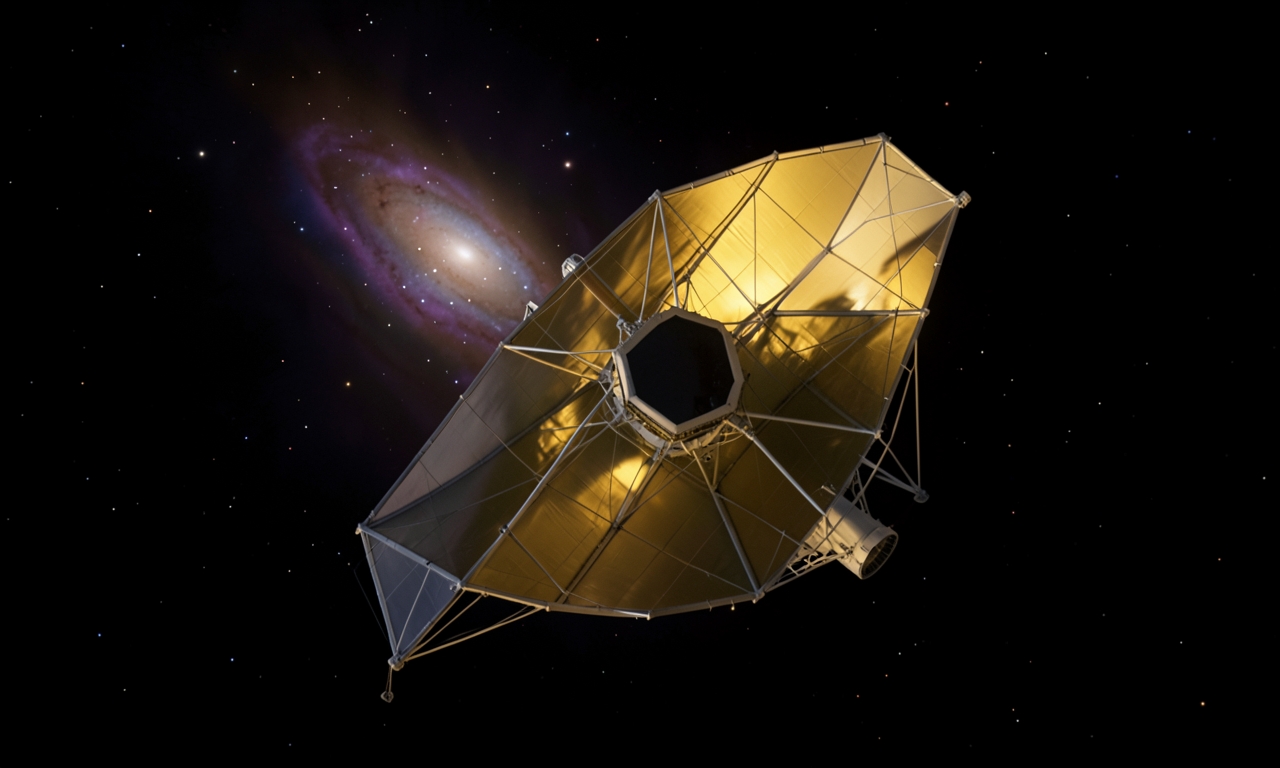
First Stars in View
In just four years since its launch, the James Webb Space Telescope (JWST) has significantly extended the cosmic lookback time, allowing astronomers to directly observe the universe’s first stars and galaxies formed roughly 13.5 billion years ago.
Scientific Breakthrough
Professor Richard Ellis of University College London (UCL) and his team employ JWST’s high‑resolution instruments to analyze the light signatures of these ancient objects, providing crucial insights into the early universe’s formation processes.
Technological Marvel
With a 6.5‑meter primary mirror and sensitive infrared detectors, JWST captures light from objects billions of light‑years away, making it possible to study stars that formed shortly after the Big Bang.
Future Prospects
Initial findings suggest that the first stars emerged in massive galaxies and ionized their surroundings. Ongoing observations will further illuminate the evolution of early galaxies and the birth of supermassive black holes.