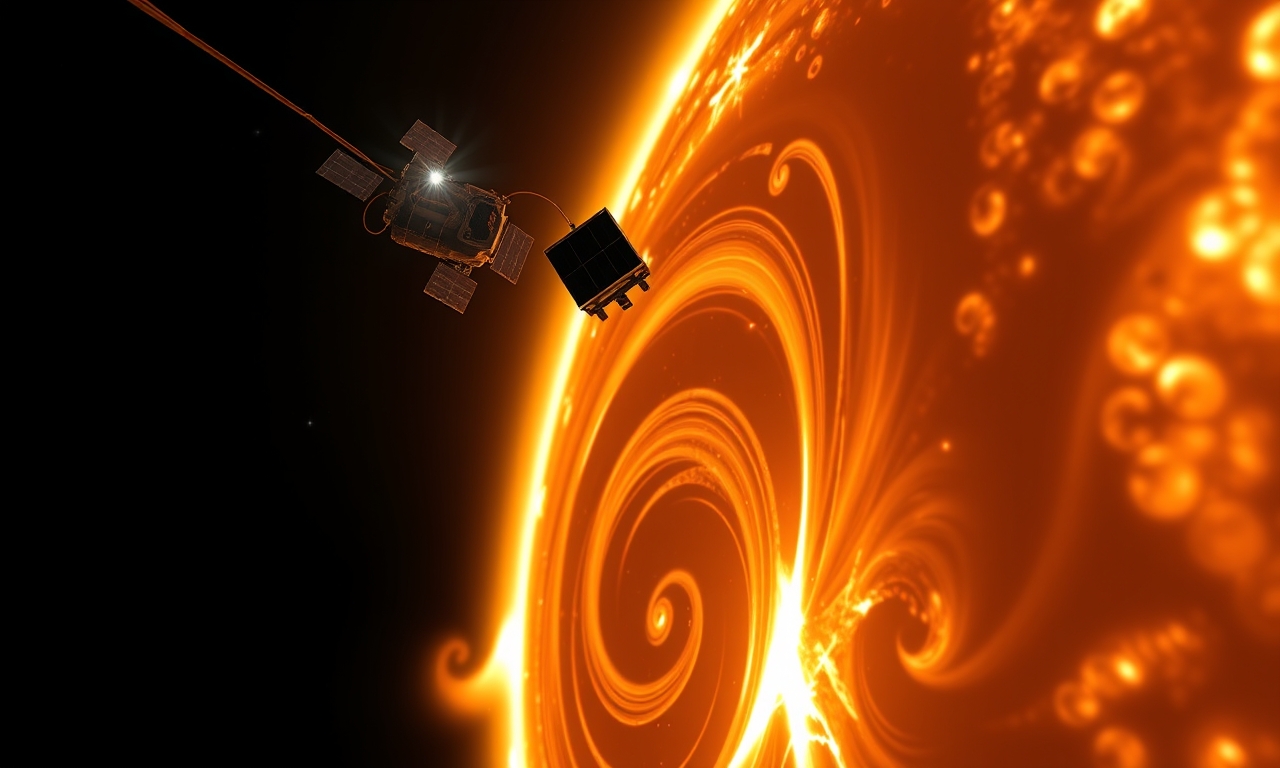
A new tool for solar observation
The Sun periodically ejects billions of tonnes of charged particles in events known as coronal mass ejections (CMEs). When a large CME strikes Earth at an inopportune moment, it can threaten satellites, power grids and communication networks.
Precision measurements are essential
Accurate, continuous monitoring of the Sun’s magnetic fields is the primary method for predicting such events. Existing instruments are often bulky or require extensive cooling, limiting their deployment.
Small size, big impact
Scientists have now created a sensor no larger than a shirt button that can detect minute magnetic variations. Its compact design allows integration on a wide range of spacecraft, including small CubeSats, vastly expanding the coverage of solar magnetic observations.
Future of space weather forecasting
Adopting this technology promises to improve CME prediction accuracy, giving power‑grid operators, satellite owners and communication providers more reliable warning times. Upcoming orbital tests will evaluate long‑term stability and performance in the harsh space environment.