Simple Calculations, Profound Consequences
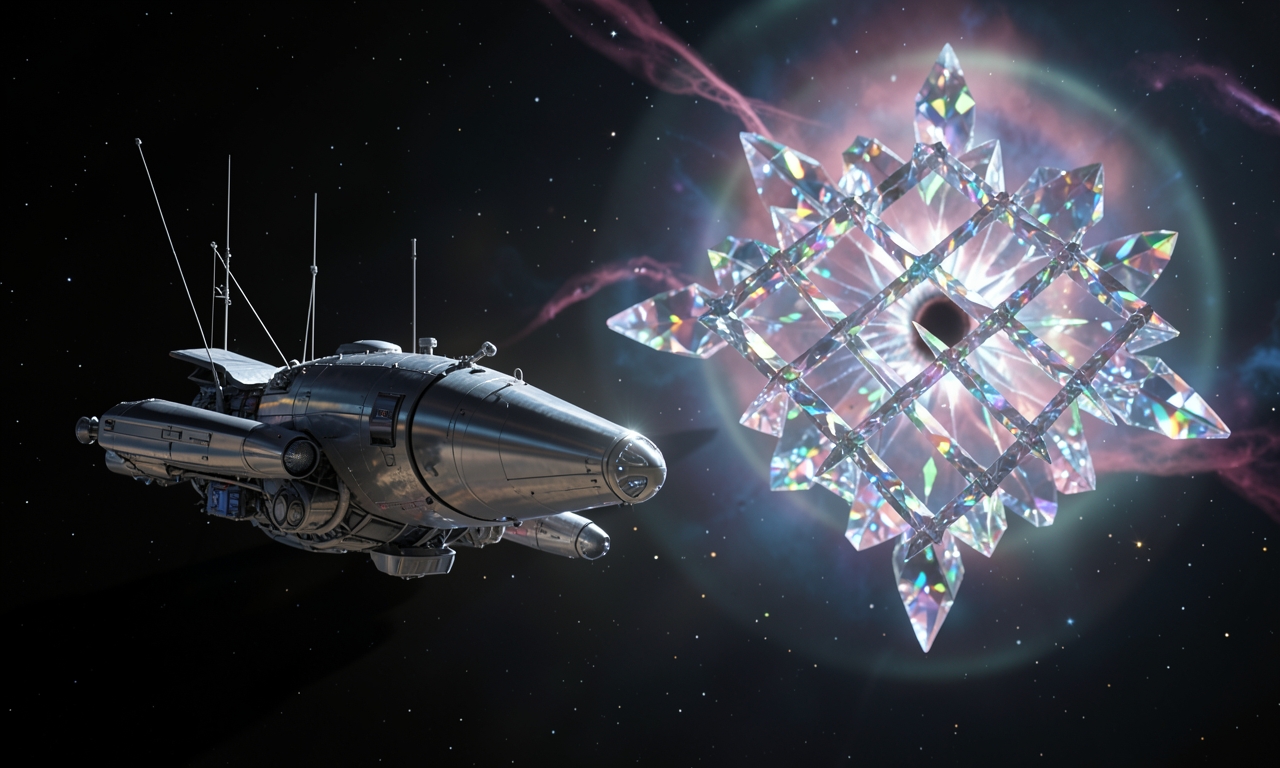
A group of physicists used basic pen-and-paper techniques to develop a model suggesting that under certain conditions, space and time might form a crystalline structure. According to their calculations, this could give rise to extremely small but dense black holes.
How a Time Crystal Forms
The concept relies on the idea that quantum vacuum fluctuations could organize into a regular lattice. If this lattice becomes sufficiently strong, it can warp spacetime to the extent that an event horizon—a defining feature of a black hole—emerges.
Scientific Significance
While the resulting black holes would be astronomically tiny, they could provide crucial clues about the interplay between quantum mechanics and gravity. The findings hint that the universe’s microscopic structure might be far more intricate than previously thought.
Future Directions
The authors emphasize that their work remains theoretical. Experimental verification would require new measurement techniques and possibly observations of extreme astrophysical events where similar crystallization might occur.