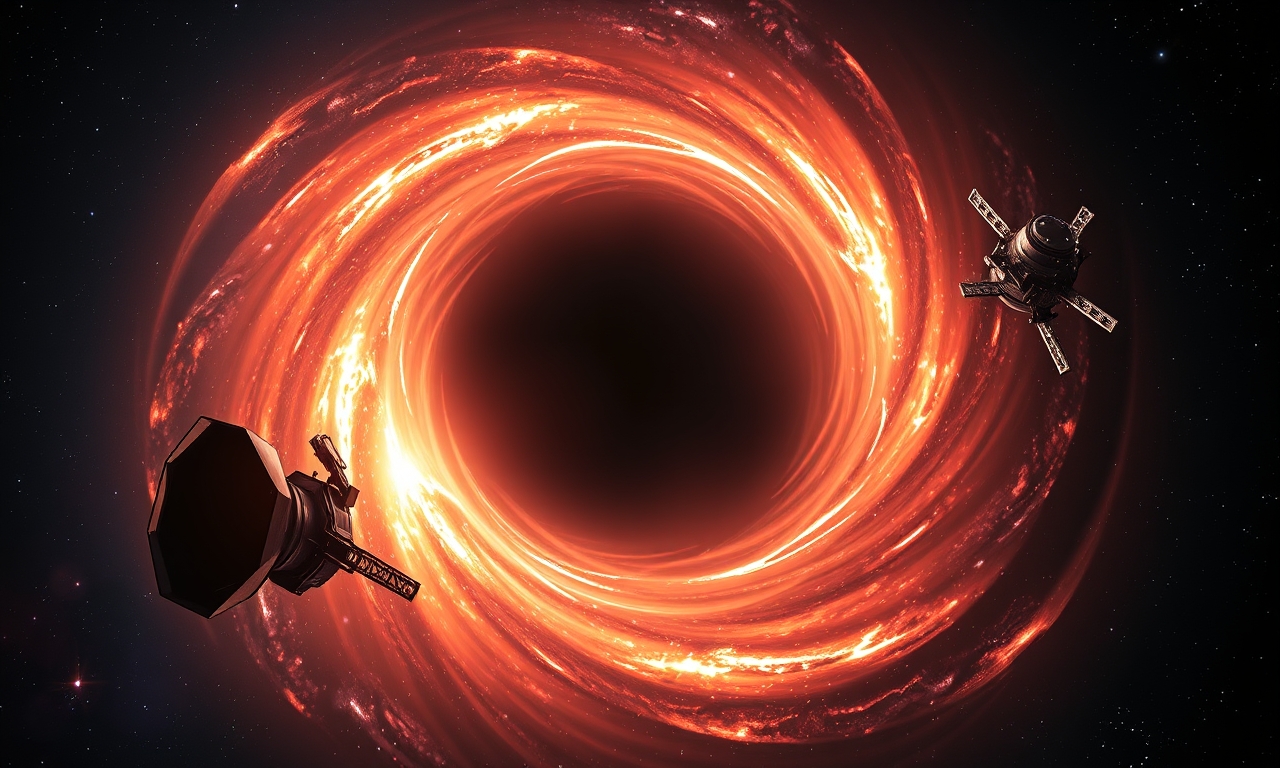
Analysis of light echoes from the vicinity of a supermassive black hole has provided evidence that dark matter may be more densely concentrated in these regions. High-resolution telescopes captured the echo signals, revealing subtle distortions indicative of additional mass presence.
The phenomenon was first noted by a research group at Virginia Tech, led by graduate student Mayank Sharma, who emphasized that the evidence for dark matter is now undeniable. Sharma explained that the data could also shed light on the spatial distribution of dark matter around massive objects.
These findings suggest that dark matter is not uniformly spread throughout the universe but can cluster near massive entities, offering critical insights into its interactions with gravitational fields and enhancing our understanding of cosmic structure.
The study employs light‑echo analysis, where light from an event is reflected by interstellar material. By measuring time delays and echo intensities, scientists can map the mass distribution in the surrounding space.
The results will appear in an upcoming journal article, potentially paving the way for further investigations into dark matter in galactic centers. The scientific community anticipates that more sensitive instruments will confirm or refine this hypothesis.