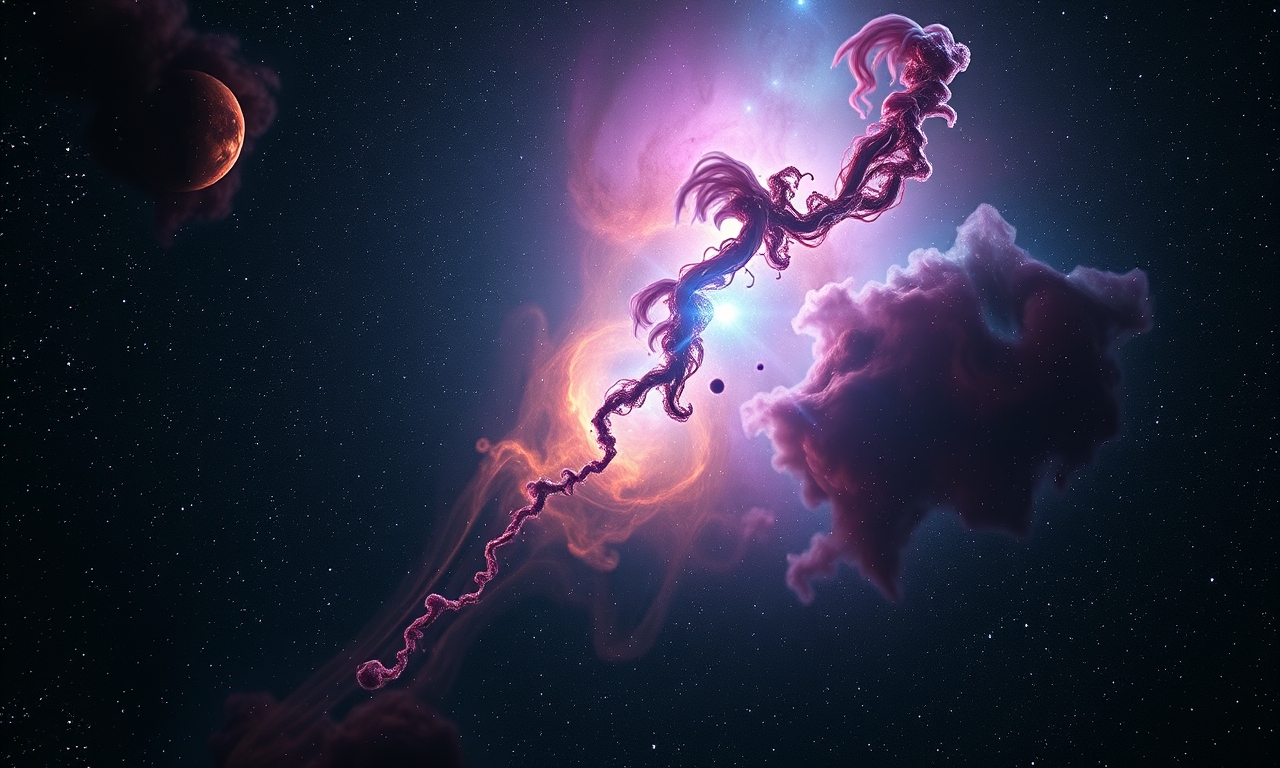
Stars form inside dense, cold regions of molecular clouds where gas collapses under its own gravity. For a long time this gravitational collapse was considered the main driver of star formation.
Magnetic fields threading the interstellar medium significantly affect the motion of the gas. They are not merely passive companions but can create structures that channel the flow of material.
Recent studies reveal that magnetic field lines act like conduits, funneling gas along sub-filaments toward regions where the density becomes high enough for collapse to proceed. This magnetic channel enhances the efficiency of mass transport to the cores of future stars.
Grasping this magnetic conduit improves the interpretation of observations of star‑forming regions and highlights the need for future measurements with facilities such as ALMA and the James Webb Space Telescope to better characterize field geometry and gas dynamics.