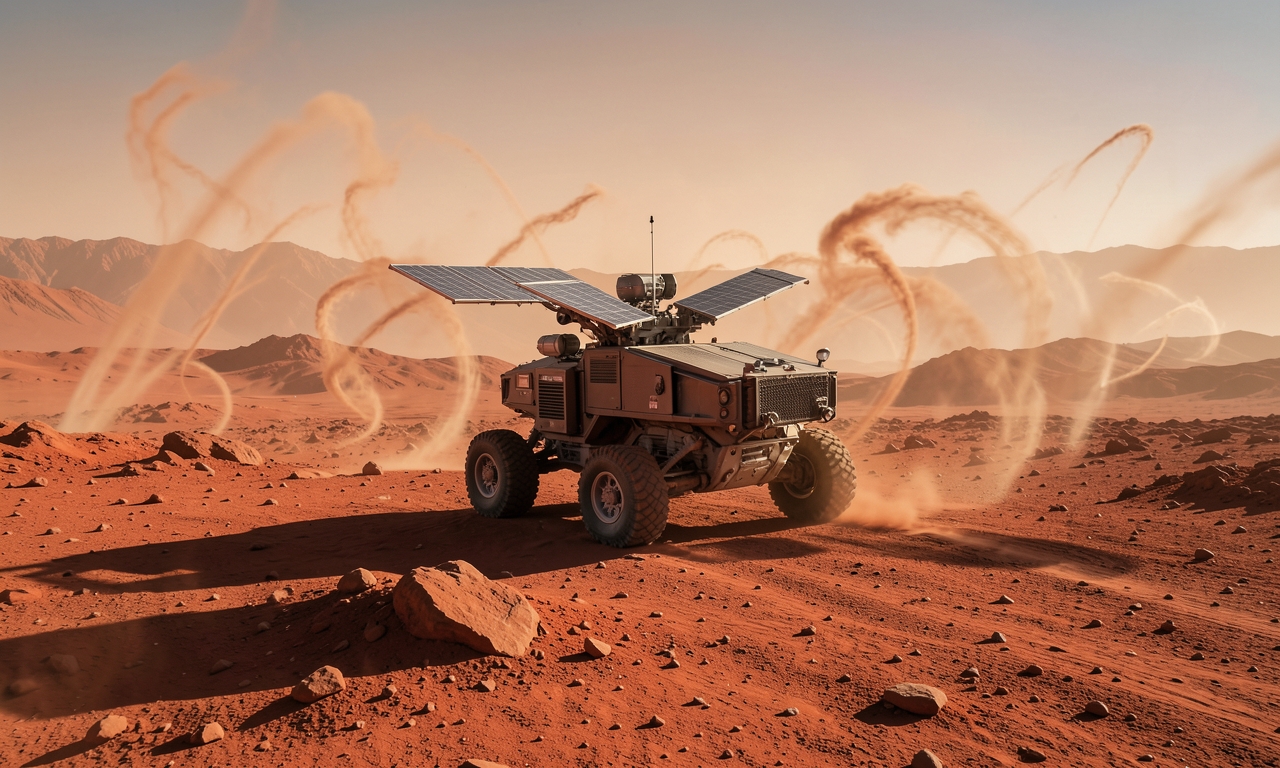
Unique imagery from Mamers Valles
The European Space Agency's Mars Express orbiter has delivered new visuals of the Mamers Valles network on the Red Planet, revealing a multitude of short‑lived vortices known as dust devils.
How dust devils form
These phenomena arise when surface‑heated air rises rapidly, entraining fine Martian dust. The thin Martian atmosphere allows such convective columns to become especially pronounced and observable.
Relevance for Martian science
Documenting dust devils provides insight into local atmospheric dynamics and surface material properties. The findings also bear on future landing site assessments, as dust devils can affect visibility and the stability of surface installations.
Imaging details
The high‑resolution camera aboard Mars Express, operating since 2003, captured the events during early morning hours when temperature gradients are strongest, fostering the most vigorous dust devil activity.
Future work
Continued analysis will aim to quantify the frequency of dust devils across different regions and evaluate their role in the planet‑wide dust cycle.