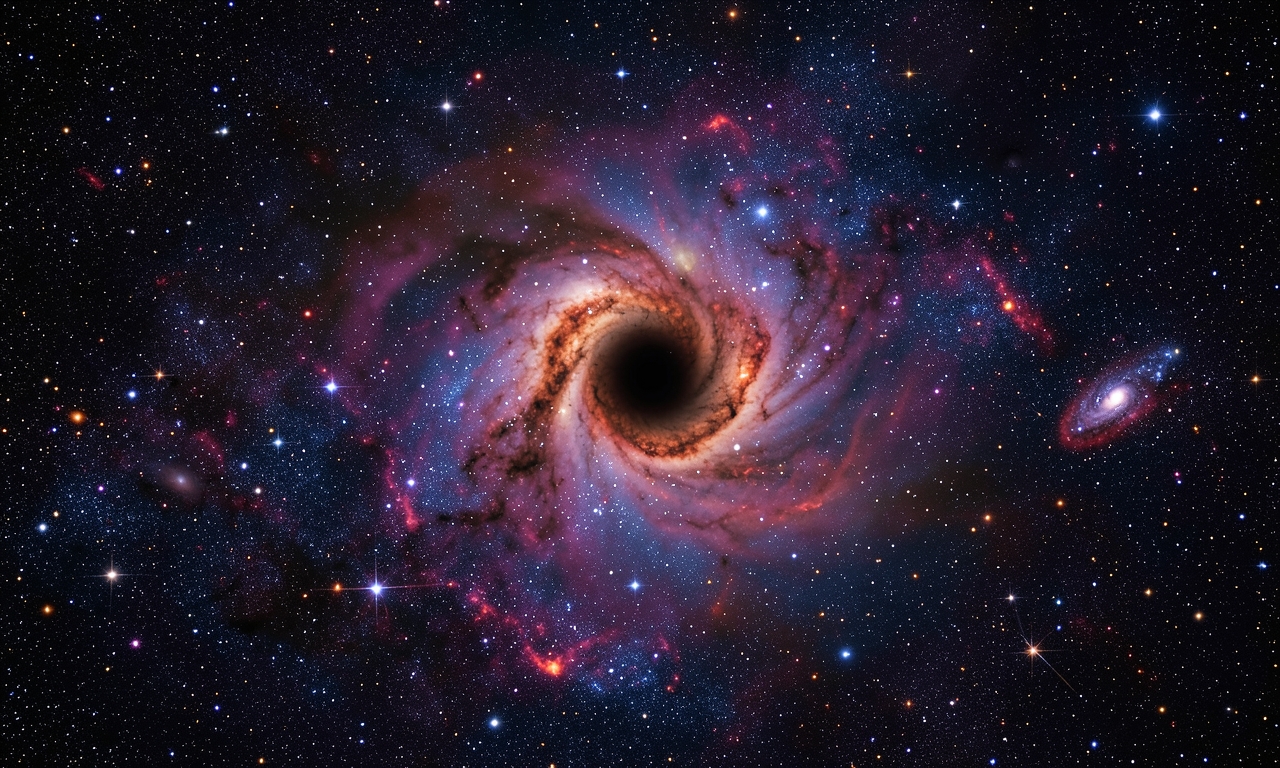
Discovery of a Candidate Supernova Remnant
The NASA Chandra X‑ray Observatory and ESA’s XMM‑Newton have recorded an unusual X‑ray source at the heart of the Milky Way. Analysis suggests the emission originates from the debris of a supernova that exploded close to the supermassive black hole Sagittarius A*.
Age and Velocity of the Ejecta
Preliminary calculations indicate the expelled material dates back approximately 1,700 years and is traveling at about three million kilometres per hour – roughly two million miles per hour.
Implications for Galactic Studies
A supernova remnant situated near a supermassive black hole is exceptionally rare, offering a unique laboratory to study interactions between stellar explosions and the extreme environment of a galactic nucleus.
Future Observations
Additional high‑resolution observations are scheduled to confirm the nature of the source. If verified as a supernova remnant, it would represent the first known case of such a structure in the immediate vicinity of Sagittarius A*.