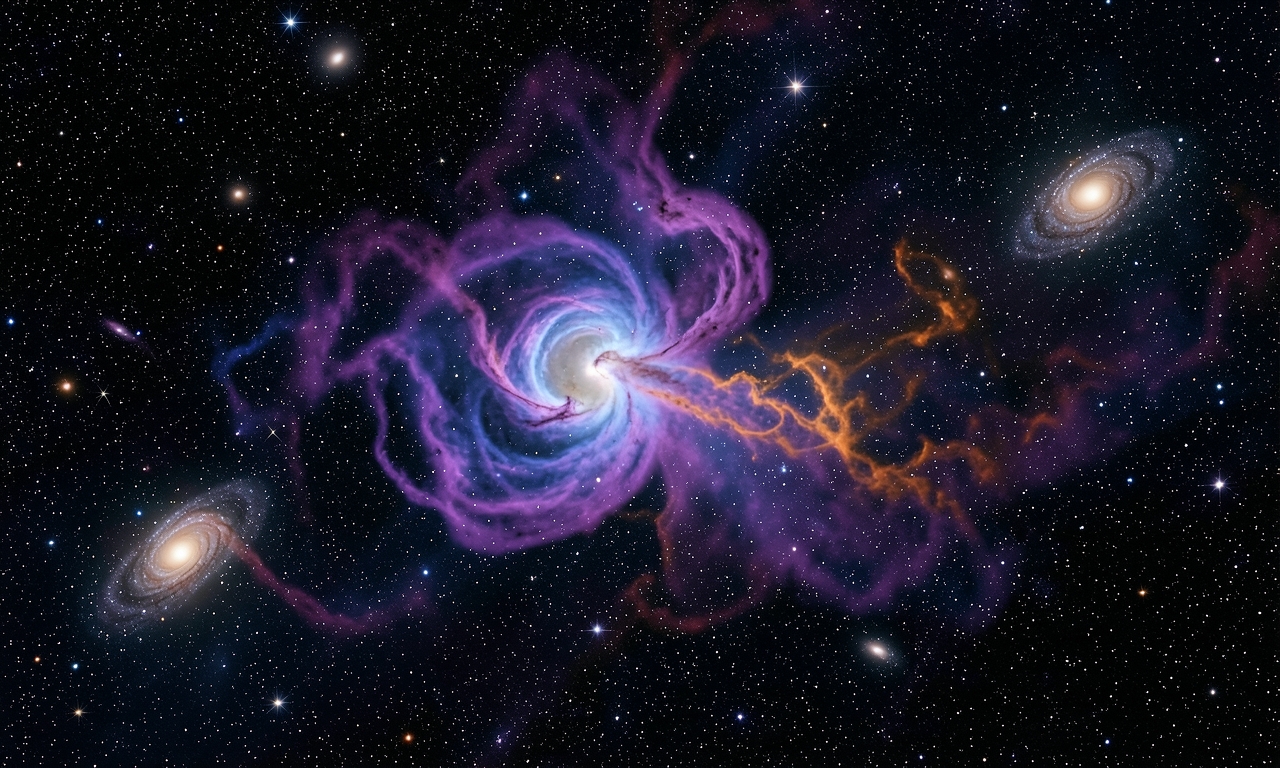
Around 4.5 billion years ago a Mars‑sized protoplanet struck the early Earth. The collision ejected vast amounts of rock into orbit, where it could coalesce into a satellite.
Simulations and Findings
Researchers used high‑resolution hydrodynamics codes to follow the debris cloud after the impact. The models indicate that within less than five hours most of the material aggregated into a coherent body that subsequently settled into a stable orbit around Earth.
- The debris cools and condenses rapidly.
- The resulting body has a composition closely matching Earth’s mantle.
- Only a minor fraction of the impactor remains in the final Moon.
Such a rapid formation accounts for the near‑identical isotopic ratios of Earth and Moon without requiring extensive mixing. Future work will refine the dependence on impact angle and velocity to test the robustness of the scenario.