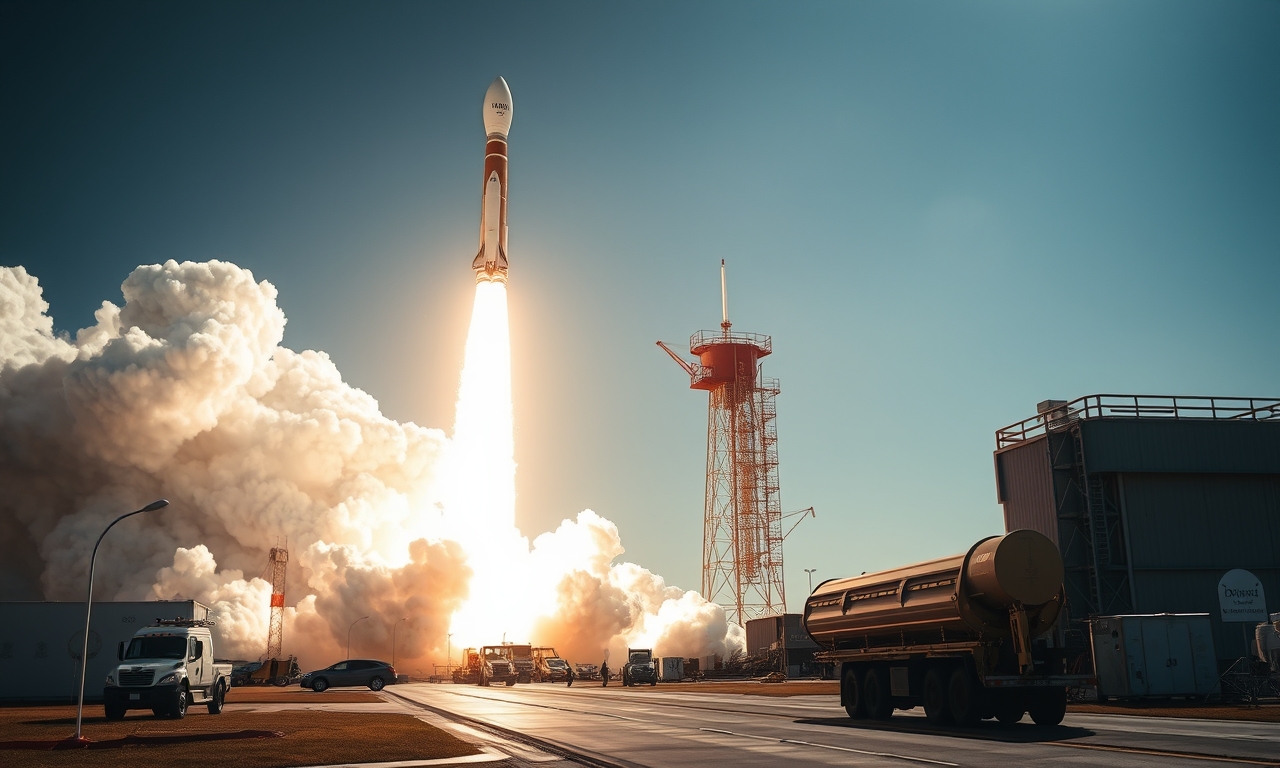
Arrival at Kennedy Space Center
The new space observatory, named after pioneering astronomer Nancy Roman, touched down at NASA’s Kennedy Space Center in Florida early Tuesday. Engineers are conducting final inspections and system checks before the instrument is mated to its launch vehicle.
Scheduled Falcon Heavy Launch
NASA intends to loft the telescope into Earth orbit this summer using a SpaceX Falcon Heavy rocket. The launch will be part of a rideshare mission that includes several complementary scientific payloads.
Adding to the Orbital Observatory Fleet
Equipped with a wide‑field infrared and optical camera, the Roman Grace Telescope will probe dark energy, exoplanets and distant galaxies. It will join the existing orbital assets Hubble, Webb, Spitzer and Chandra.
NASA‑SpaceX Collaboration
The partnership with SpaceX allows NASA to lower launch costs while retaining flexibility in mission scheduling. Falcon Heavy will deliver the telescope to a sun‑synchronous orbit alongside other research payloads.
Future Outlook
Following a successful launch, the observatory will undergo a calibration phase before beginning full‑science operations. The astronomical community anticipates the first data releases by next year.