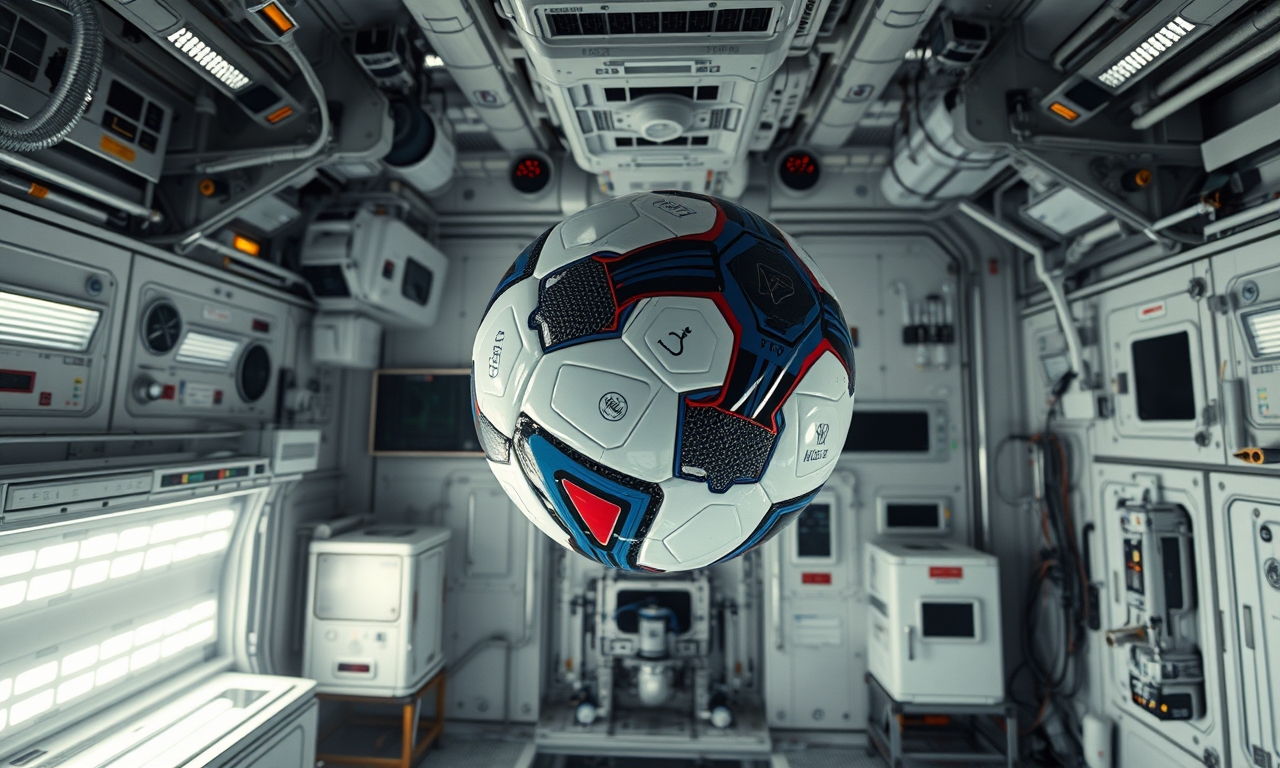
The United States space agency NASA has transported an official football of the upcoming 2026 FIFA World Cup to the International Space Station (ISS). The mission aims to examine the ball’s performance in microgravity while providing the crew with a novel recreational activity.
Technical evaluation of the ball
Designing a soccer ball that delivers predictable spin is a complex engineering task. In weightless conditions, aerodynamic forces differ markedly, allowing researchers to study surface texture and material response. NASA engineers plan to record the ball’s flight characteristics to inform future sports‑equipment development.
Recreation for the crew
The ISS offers limited options for physical exercise beyond scheduled workouts. The World Cup ball gives astronauts a chance to practice coordination and footwork in an environment where gravity does not constrain motion. Early footage shows the ball drifting slowly through the cabin as crew members give it gentle kicks.
NASA‑FIFA collaboration
The partnership between the space agency and the global football governing body FIFA is part of a broader effort to link scientific research with popular cultural events. Supplying test objects for the ISS is intended to raise public interest in space exploration.
Future prospects
Data collected aboard the station will be analyzed after the ball’s return to Earth. In addition to potential improvements in future football designs, the findings may benefit other microgravity applications, such as material science experiments.