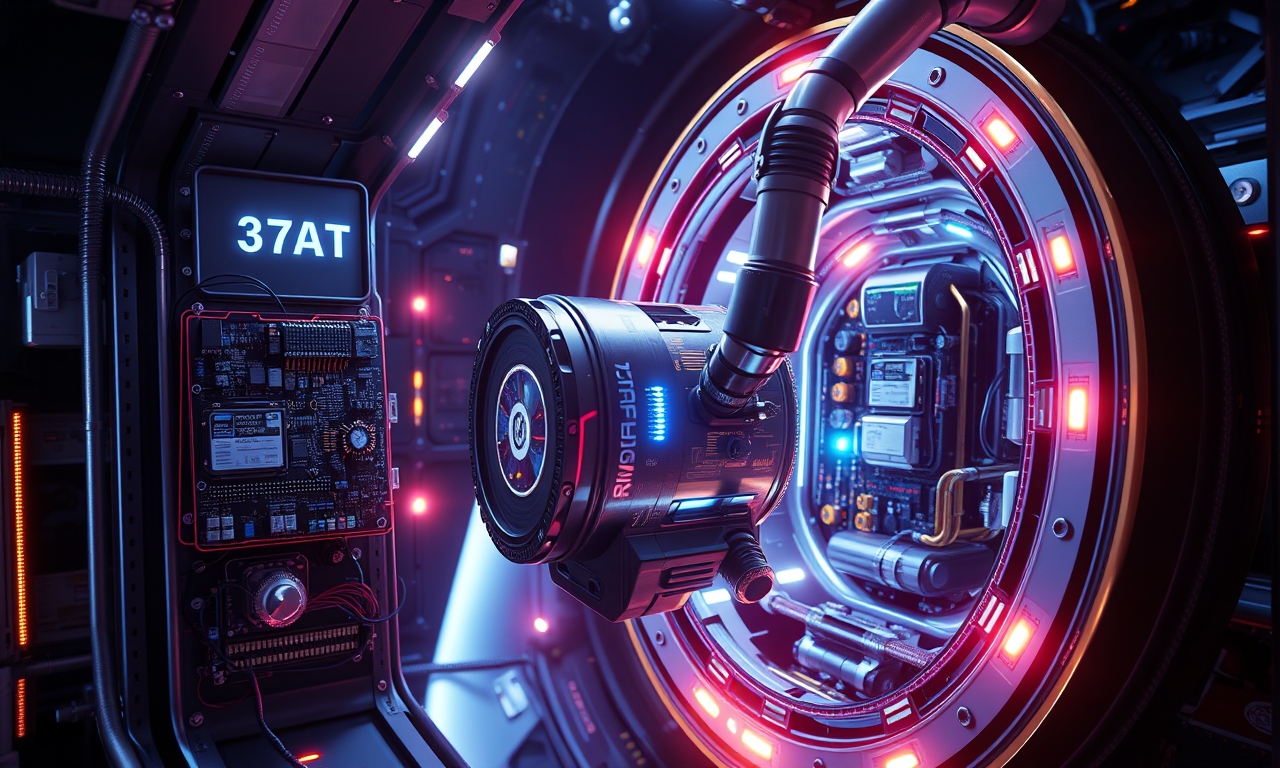
A team of NASA-sponsored scientists and engineers has introduced a novel approach to observing high-energy particles in the near-Earth space environment. The approach integrates miniaturized sensors into a compact, multi-view particle-detection instrument unlike any previously available.
The instrument is specifically designed for deployment on CubeSats, small satellites that have become increasingly popular for low-cost scientific missions. By incorporating multiple viewing angles, the device can simultaneously capture particles from different directions, significantly improving directional resolution.
Measurements focus on energetic particles present in the magnetosphere and upper atmosphere, which are relevant for space weather and satellite radiation exposure. The high fidelity of the data enables a better understanding of particle acceleration processes and their interactions with Earth's environment.
Developers view the system as a foundation for future CubeSat constellations capable of providing global, real-time monitoring of particle fluxes. Additional testing and calibration are planned to verify performance under actual space conditions.