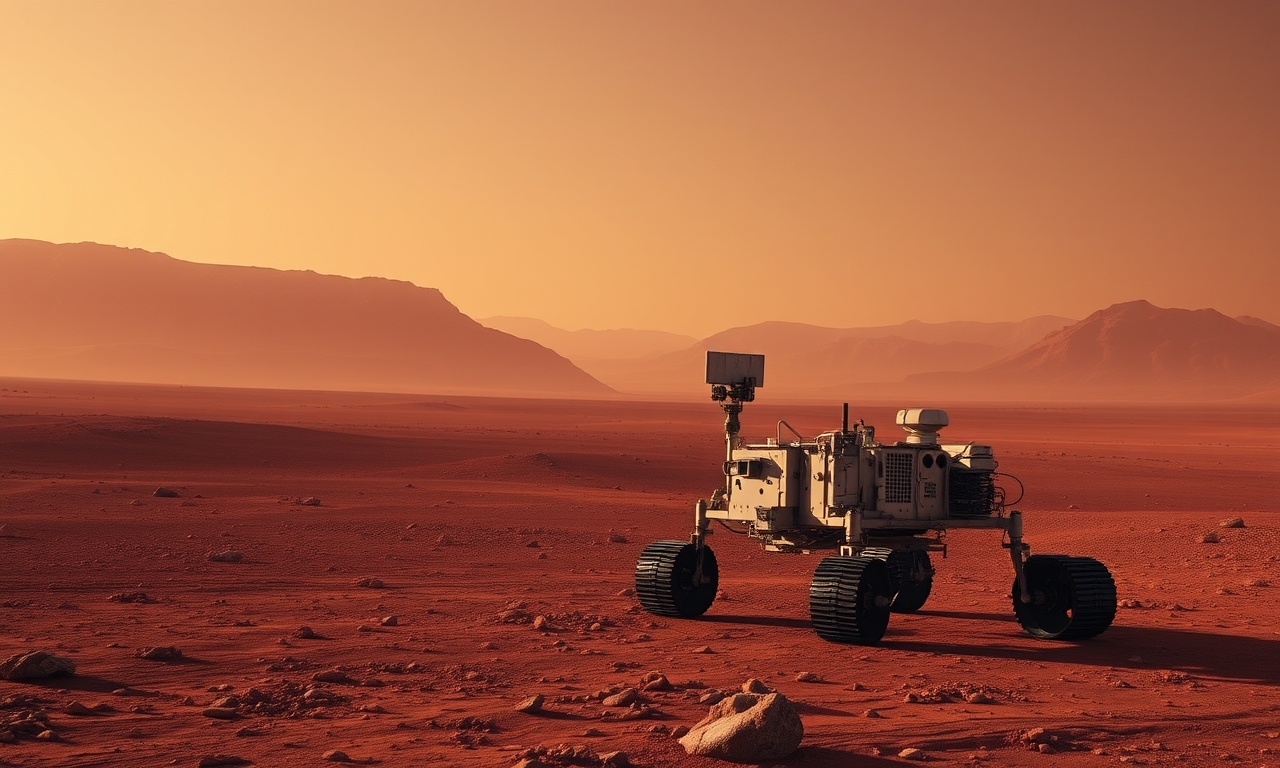
The fiftieth anniversary of Viking 1’s successful touchdown on Mars is the focus of the latest episode of the This Week In Space podcast.
Hosts Rod Pyle and Tariq Malik are joined by Dr. Pascal Lee, a longtime contributor to Mars exploration planning, and Dr. Penny Boston, an astrobiologist known for her work on extremophiles and habitability.
The conversation begins with a technical overview of the Viking 1 mission: the lander touched down on 20 July 1976 in Chryse Planitia, returned the first colour images of the Martian surface, and carried out a suite of biology, chemistry, and physics experiments designed to search for signs of life.
- First colour panoramas of Mars
- Operational lifespan exceeding six years
- Experiments including gas exchange, labelled release, and pyrolytic release
- Data that informed the design of later rovers such as Spirit, Opportunity, Curiosity, and Perseverance
Lee and Boston then turn to the astrobiological implications. They note that while Viking 1 did not detect definitive biosignatures, its results clarified the oxidizing nature of the Martian soil and helped refine the search strategies for subsequent missions, emphasizing the need to look beneath the surface and in protected niches.
The episode concludes with a forward‑looking discussion about crewed Mars missions, highlighting how lessons from Viking 1—particularly regarding dust management, power generation, and autonomous operations—are being integrated into habitat concepts and life‑support systems for future human explorers.