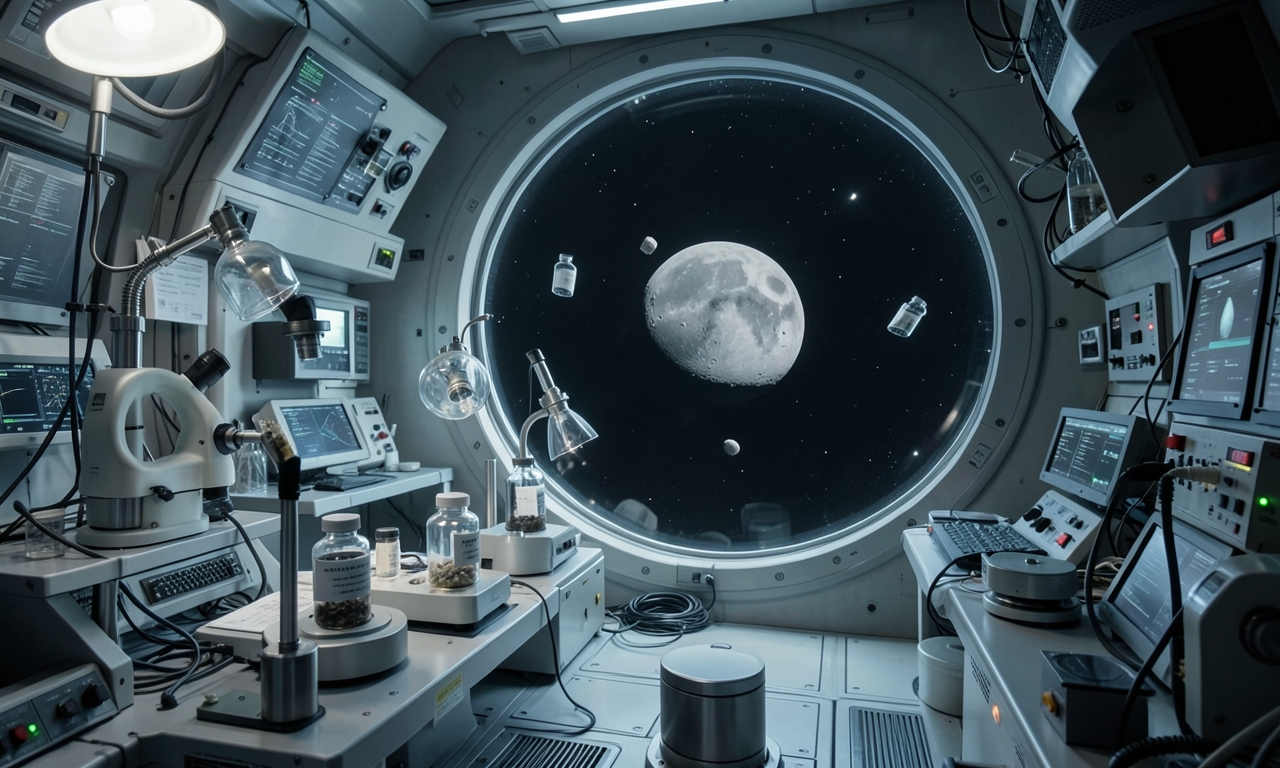
Different conditions across lunar hemispheres
For billions of years the Moon has remained exposed to a continuous flow of charged particles emitted by the Sun. Yet evaluations of rock samples collected from distinct zones of the satellite indicate that its two halves are not subject to identical particle conditions.
- The Earth-facing side encounters a modified solar wind.
- The far side receives the undisturbed solar wind.
- Particle speed and energy vary between the hemispheres.
Earth's magnetic field appears to act as a barrier that changes the nature of the solar wind on the lunar near side. As a result, the particles arrive at that surface with lower velocity and a different energy profile than those hitting the far side.
These conclusions derive from laboratory study of returned lunar specimens, which record the long-term interaction between solar wind and surface material. The results contribute to a clearer picture of the physical environment within the Earth-Moon system.