Follow‑up observations
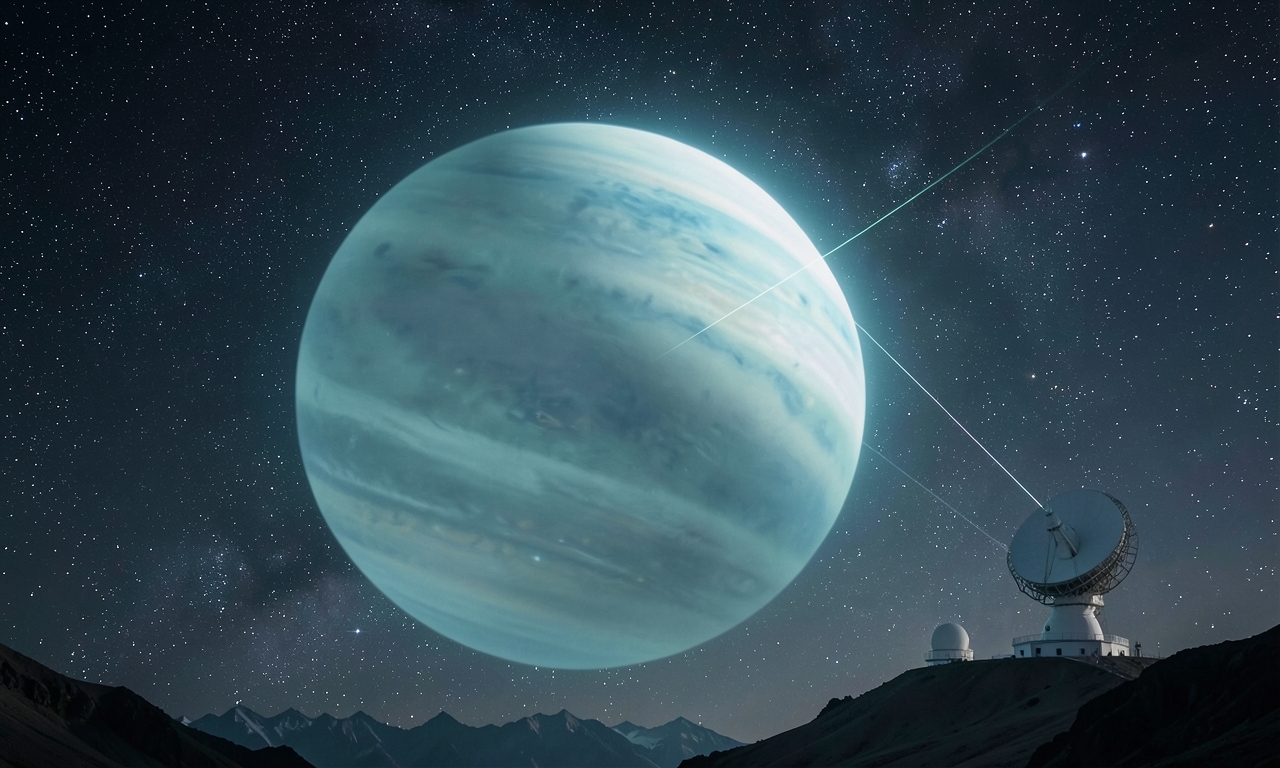
A research team employed the Subaru Telescope to conduct detailed follow‑up measurements of the recently identified exoplanet system TOI‑1883. The new data indicate that the planet TOI‑1883 b, located roughly 383 light‑years from Earth, belongs to the class of super‑Neptunes but exhibits an unusually low bulk density.
Physical characteristics
Analysis shows that TOI‑1883 b has a density of only 0.4 g/cm³, comparable to that of a foam material. Although the planet’s radius exceeds that of Neptune, its mass is relatively modest, making it one of the fluffiest known worlds. The low density suggests a composition dominated by light gases with either a small solid core or none at all.
Implications for planetary science
Such “puffy” planets challenge current models of planet formation, demonstrating that massive gaseous envelopes can accumulate around lightweight cores under specific temperature and stellar irradiation conditions. The discovery broadens the known diversity of exoplanets and provides valuable constraints for future theoretical work.
Publication and next steps
The findings were posted on the arXiv pre‑print server on 5 June. The investigators plan additional observations to probe the planet’s atmospheric composition and temperature structure in greater detail.