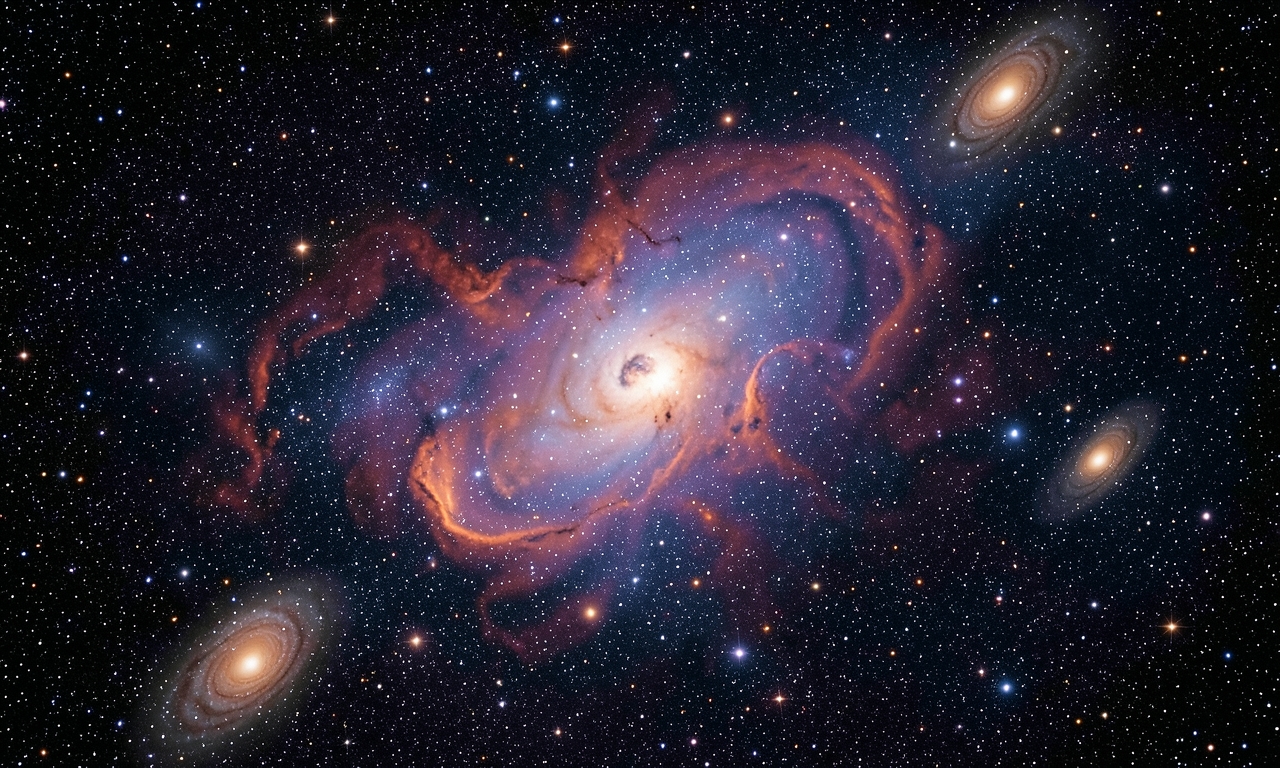
Quasars as a Window to the Early Universe
Extreme quasars observed shortly after the Big Bang provide astrophysicists with clues about the formation of supermassive black holes.
Their light encodes information about the surrounding environment and the mass of the central black holes.
By analyzing this radiation, researchers can infer the growth processes that occurred within the first hundred million years after the Big Bang.
These findings help refine models of early galaxy formation and black hole seeding.