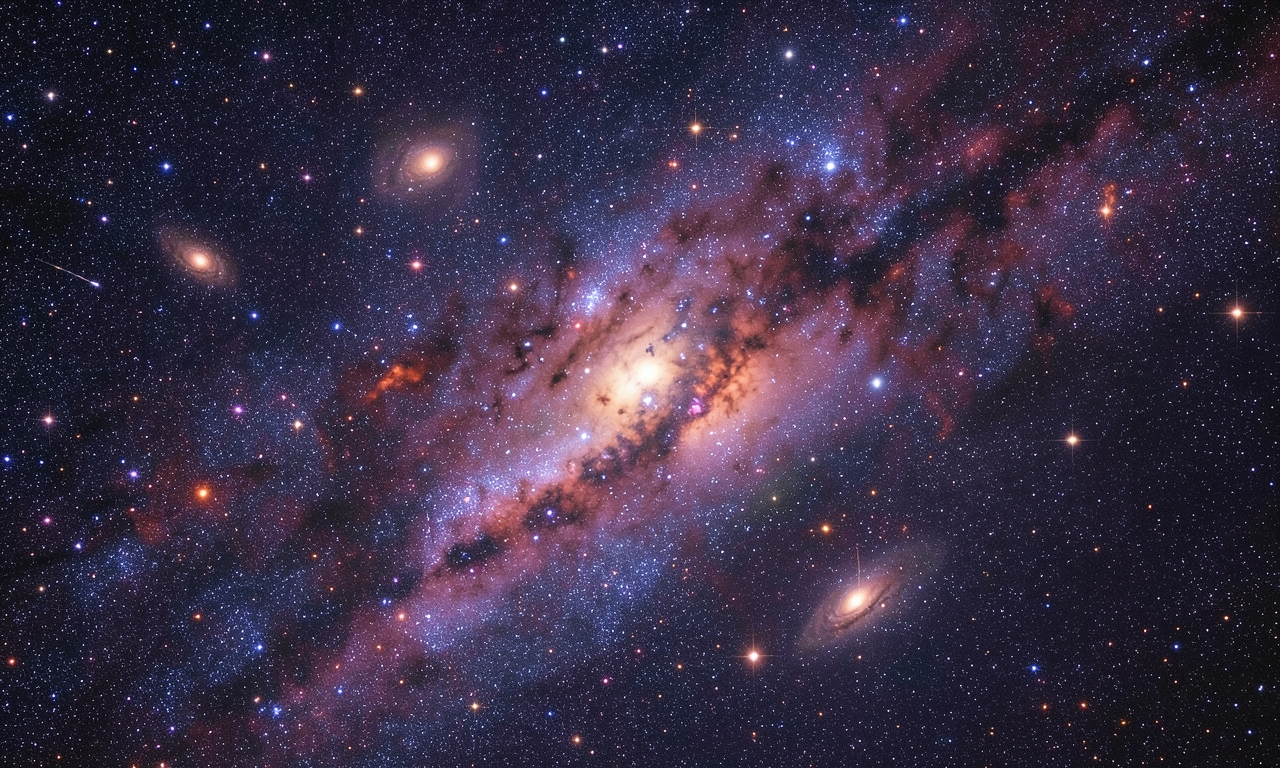
A puzzling population from the early cosmos
For roughly three years, astronomers have been confronted with a multitude of minute, intensely luminous red points detected in the most distant galaxies. Their abundance and brightness raised questions about the completeness of current cosmological models.
James Webb Space Telescope observations
The James Webb Space Telescope (JWST) obtained the most detailed image yet of one such source. Spectroscopic and imaging data indicate a compact, high‑energy emitter that cannot be explained by ordinary stellar processes.
Interpretation as a black hole
Analysis suggests the object is a stellar‑mass black hole enshrouded by a dense cocoon of gas and dust. The surrounding material absorbs and re‑emits radiation, making the source appear as a red dot in optical surveys.
Implications for cosmology
This finding confirms the presence of a population of early, massive black holes that formed within a few hundred million years after the Big Bang, influencing theories of galaxy formation and the evolution of the first stars.
Future prospects
Additional JWST observations aim to determine how common such disguised black holes are and what role they played in the reionisation of the early universe.