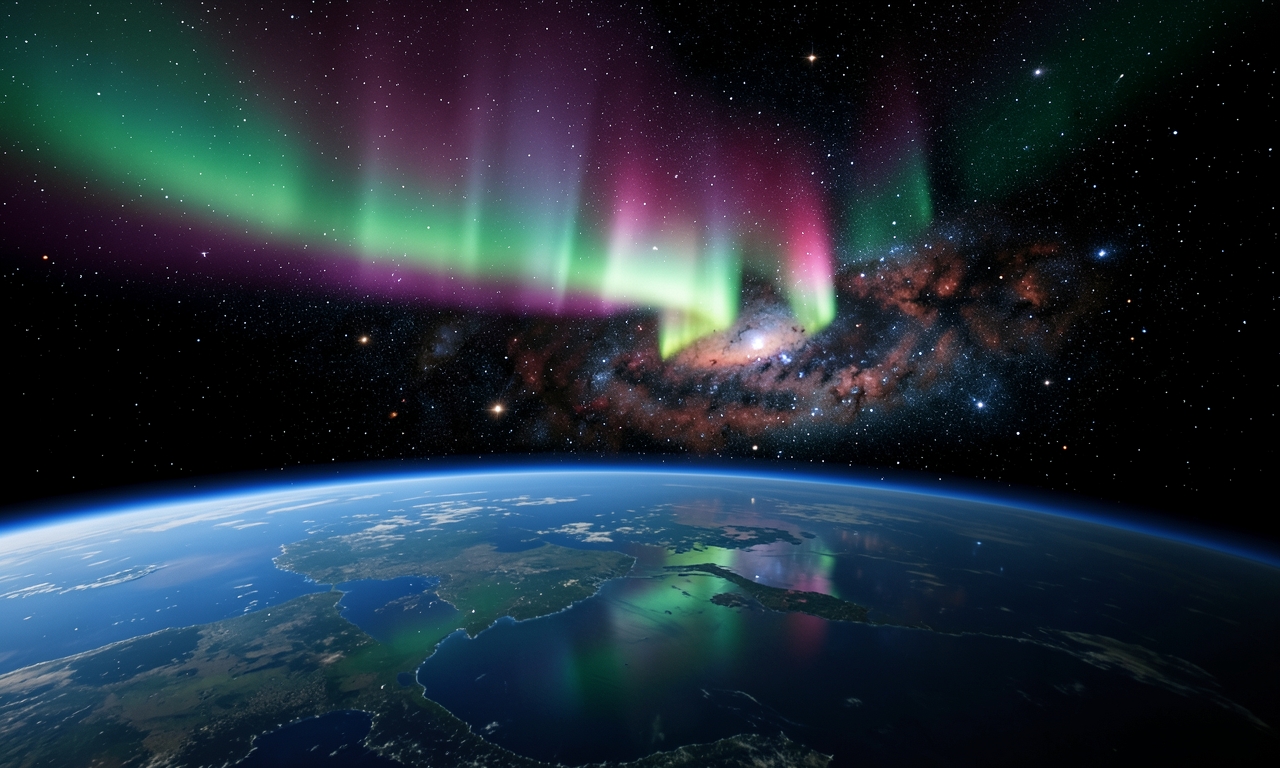
A rare view from orbit
On 5 June 2026 the International Space Station (ISS) recorded a striking image of the aurora australis as it unfolded over the Indian Ocean. The shot was taken from roughly 436 km (271 miles) altitude while the station passed south‑west of Perth, Australia.
What drives the glow
The colorful display was triggered by a period of heightened solar activity. Charged particles emitted by the Sun interact with Earth’s magnetic field and excite atmospheric gases, causing them to emit light. Different gases produce distinct hues, with green and red being the most common.
Observing conditions
The aurora was especially intense because solar eruptions in the days preceding 5 June were unusually strong. The ISS’s orbital position offered an unobstructed line of sight to the southern auroral oval, which extended across the Indian Ocean.
Scientific relevance
Images like this help researchers study the coupling between solar wind and Earth’s magnetosphere. Data from the ISS complement ground‑based observations and improve models of space weather, which can affect satellites and power grids.
Future outlook
Additional observations are expected as the current solar cycle maximum continues through 2027. The ISS remains a valuable platform for continuously monitoring polar lights from space.