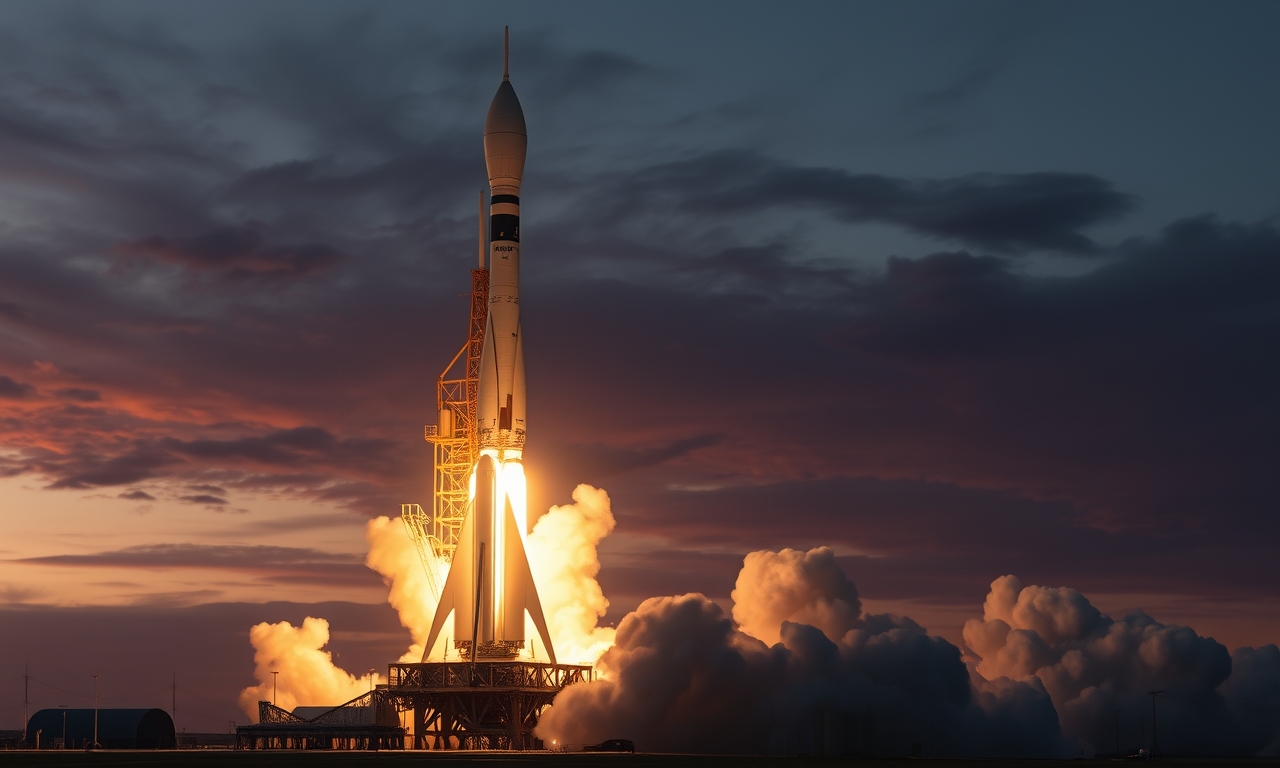
SpaceX Conducts 13th Starship Test Flight
On July 24, SpaceX launched the thirteenth suborbital test flight of its Starship system. The mission aimed to address shortcomings observed in the previous flight while achieving the first deployment of operational satellites.
During ascent, the launch vehicle exhibited improved performance relative to the earlier test. Adjustments were made to engine control and structural integration, which telemetry indicated resulted in a more stable flight path.
At an altitude of roughly 120 kilometers, several satellites were released from the Starship payload bay. After separation, ground stations confirmed that the satellites deployed their antennas and began transmitting initial telemetry signals, indicating a successful deployment.
The flight concluded with a planned return of the Starship booster to the landing zone, where it was decelerated according to the prescribed profile and safely recovered. This return highlighted progress in the reusability of the system.
SpaceX notes that data from this flight will continue to be analyzed to further refine engines, thermal protection, and flight software. The successful satellite deployment represents a milestone toward routine commercial launches using Starship.