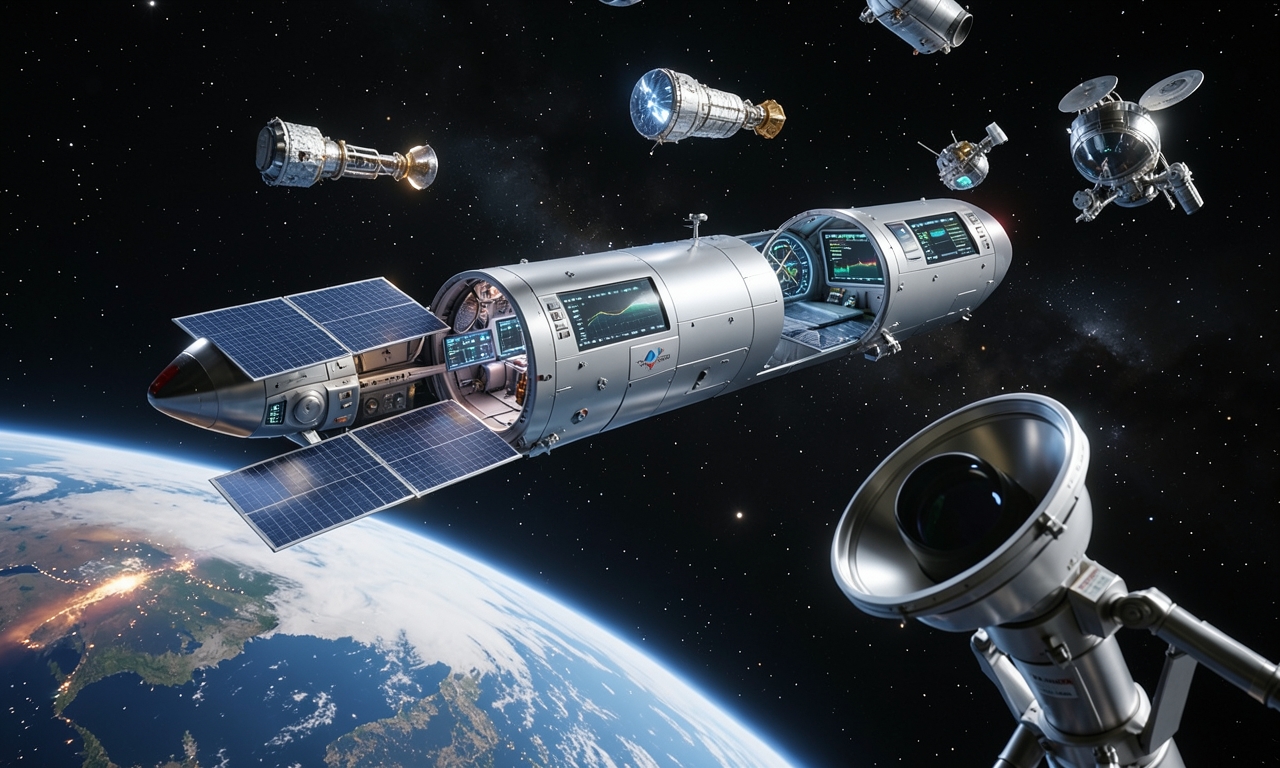
Space Mission Update: Dragon's Return Journey
The International Space Station (ISS) will mark a significant milestone this Tuesday, June 16, as the SpaceX Dragon spacecraft prepares to depart for its return to Earth. This 34th resupply mission carries critical scientific research and hardware updates from the orbital laboratory.
The mission, which began in April, proved essential for ongoing experiments in space. Among the samples returning are materials from the SPICA high-energy particle accelerator and results from biology experiments conducted under the NASA Apogee Storeties program. These findings are expected to advance our understanding of material science and biology in microgravity environments.
- Live stream on NASA+, Amazon Prime Video, and YouTube
- Departure time: 11:45 a.m. EDT (17:45 MESZ)
- Landing site: Texas
The Dragon will now embark on a five-hour journey back to Earth, ensuring the safe return of sensitive experiments. The recovered samples will be distributed to scientists worldwide in the coming weeks for analysis, potentially leading to breakthrough discoveries in space-based research.
Live Coverage Details
Viewers can watch the departure live starting at 11:45 a.m. EDT. The broadcast, available on NASA+, Amazon Prime Video, and the agency's YouTube channel, will include real-time updates throughout the mission.