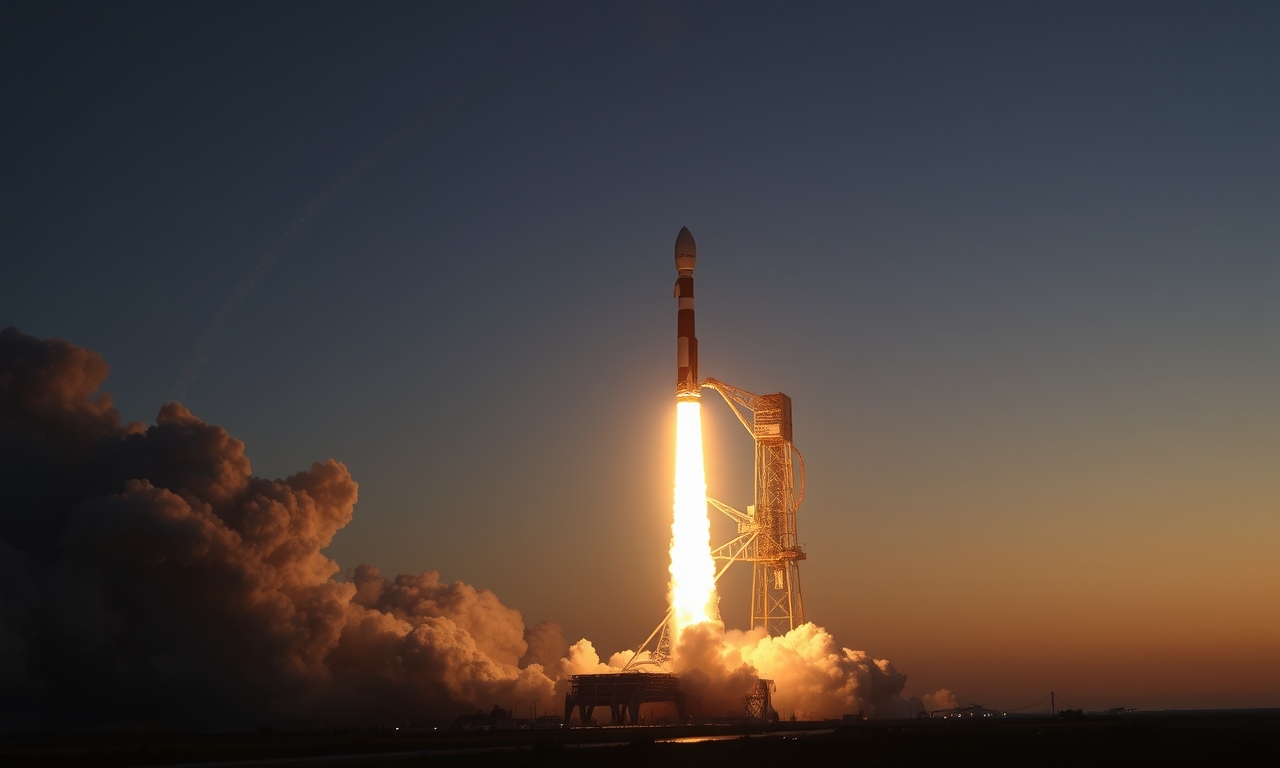
Launch and Recovery Success
On Monday, June 8, 2026, a Falcon 9 rocket lifted off from Cape Canaveral Space Force Station in Florida, delivering 29 new Starlink satellites into low‑Earth orbit.
Booster achieves unprecedented reuse
The vehicle’s first stage, a reusable booster, completed a controlled descent and landed safely, marking its 35th successful flight and recovery – a new record for the company.
Flight profile and landing
Approximately two and a half minutes after liftoff, the booster separated from the payload and performed a series of burns to re‑orient for re‑entry. It then executed a precision landing on an autonomous drone ship positioned off the Floridian coast.
Implications for the industry
This milestone underscores the cost‑saving potential of reusable launch systems. Each additional flight reduces the per‑kilogram launch cost, benefiting the expanding Starlink constellation.
Future plans
SpaceX will analyze the flight data to further extend booster lifespans, while upcoming missions are slated to launch more Starlink satellites from the same launch complex.