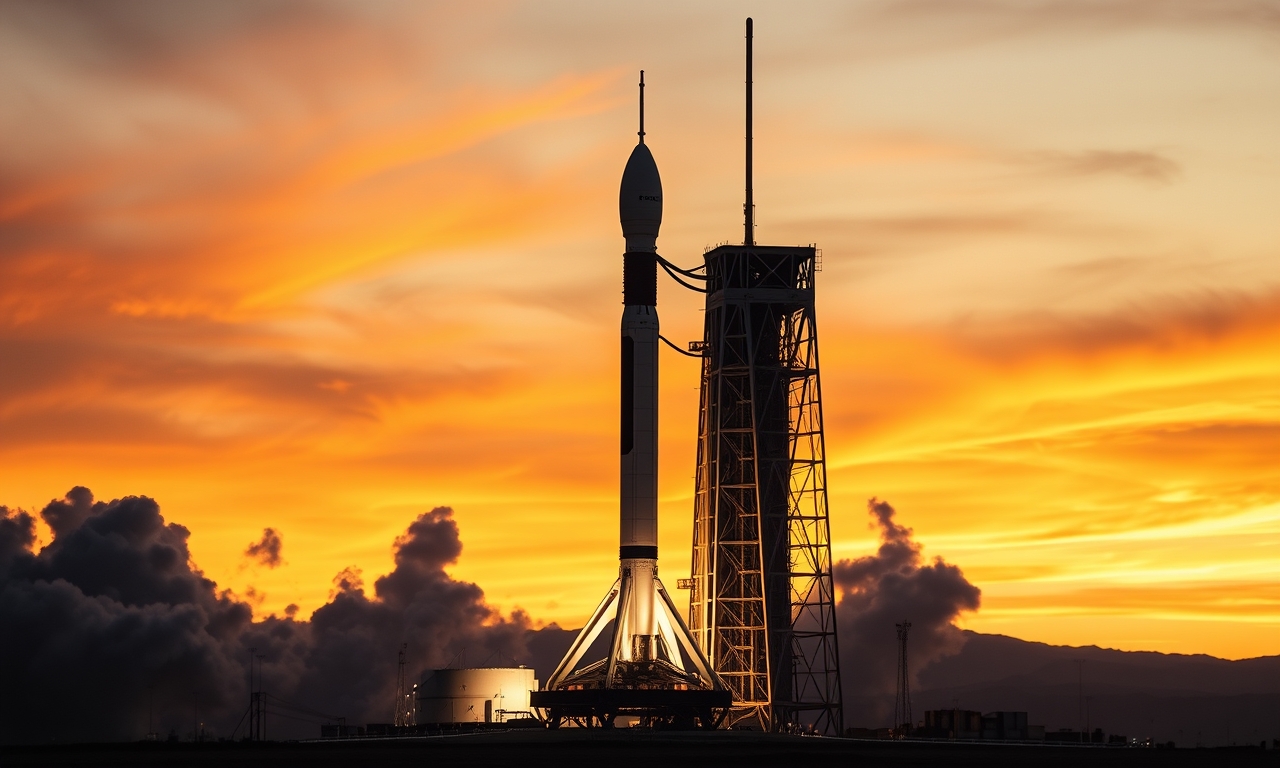
Launch from Vandenberg
A Falcon 9 launch vehicle operated by SpaceX lifted off on Monday, June 15, 2026, from Vandenberg Space Force Base in California. The mission placed 24 additional Starlink satellites into low‑Earth orbit.
Technical overview
The two‑stage rocket employed a reusable first stage, which was prepared for a controlled ocean landing after separation. The second stage delivered the payload into a low‑Earth orbit designed for broadband communications.
Purpose of the Starlink expansion
Adding 24 satellites aims to enhance global coverage of the Starlink network, especially in remote areas lacking reliable internet access. Each satellite carries a phased‑array antenna system that enables low‑latency data transmission.
Implications for the space industry
The successful launch highlights SpaceX’s capability to conduct frequent missions while demonstrating reusability of launch hardware. The company plans to increase the cadence of Starlink launches to meet growing customer demand.
Next steps
After reaching orbit, the satellites will autonomously adjust their positions and undergo communications system testing. The next scheduled SpaceX launch is slated for late June and is expected to carry another batch of roughly 30 Starlink satellites.