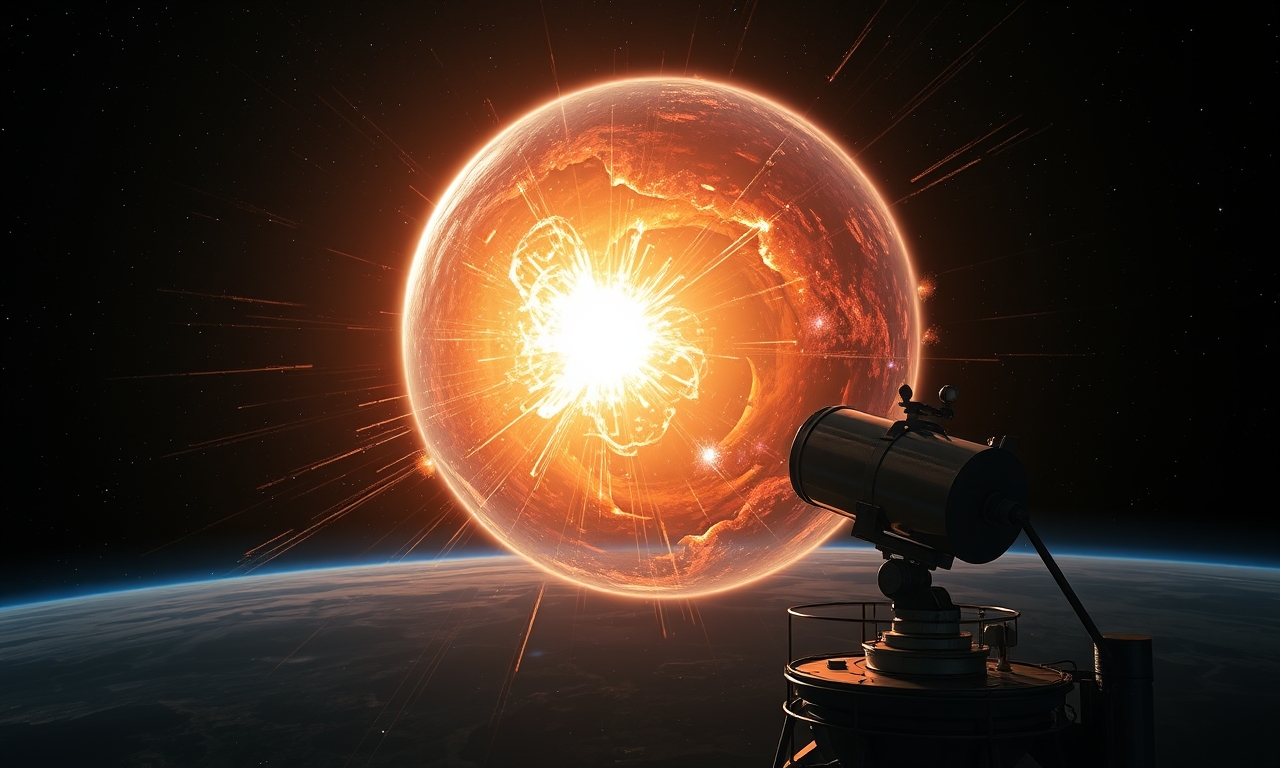
Historical Significance of Supernovae
Ancient cultures recorded bright transient stars as guests, while medieval Europeans viewed them as bad omens. Indigenous peoples incorporated the dramatic explosions into myths and art.
What is a Core‑Collapse Supernova?
A core‑collapse supernova occurs when a massive star exhausts its nuclear fuel and its core collapses under gravity. The ensuing implosion and explosion eject vast amounts of energy and matter into space.
Scientific Opportunities
By studying the emitted light and the remnants left behind, astronomers can investigate stellar composition, element formation, and the universe’s expansion. Supernovae also act as cosmic beacons to measure the rate of cosmic expansion.
Technological Advances
Modern ground‑based and space‑borne telescopes now capture supernovae in real time. Combining optical, X‑ray, and radio observations provides a comprehensive view of the underlying physics.
Future Outlook
Continued monitoring of supernovae will advance research into dark matter, neutron stars, and the origins of heavy elements, while linking ancient observations to contemporary science remains a compelling field of study.