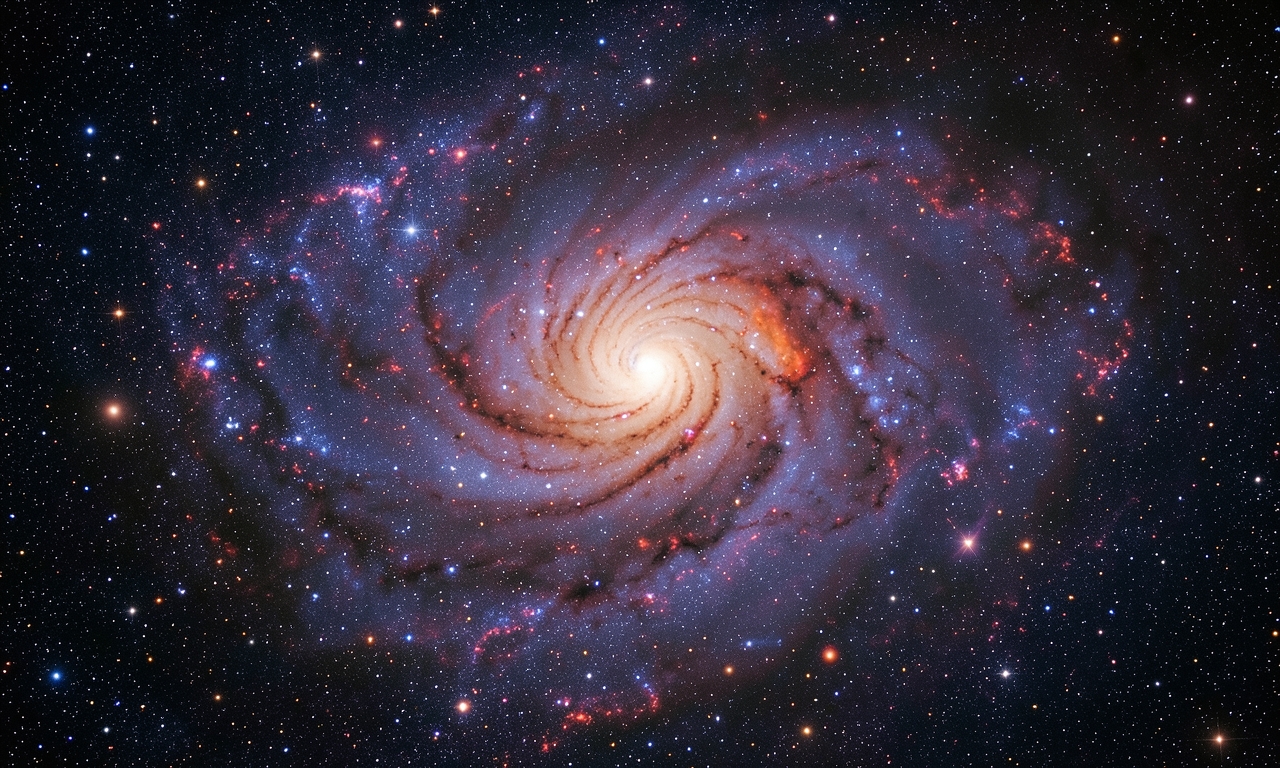
The Milky Way, our home galaxy, is a complex system of stars, gas, and dust. Its structure is not yet fully understood, but new findings are helping to expand our knowledge.
Using observations from an X-ray observatory, scientists have found that the outer spiral arms of the Milky Way may extend further than previously thought. This result is based on the analysis of X-ray emissions from hot gases in the outer regions of the galaxy.
The Significance of the Discovery
The discovery could lead to a revised understanding of the Milky Way's structure. The outer spiral arms are a crucial part of the galaxy, and their size and shape have a significant impact on the overall structure of the Milky Way.
Research will continue to focus on understanding the structure of the Milky Way. By combining observations and simulations, scientists hope to gain a more accurate picture of the galaxy.
- The Milky Way is a barred spiral galaxy, consisting of hundreds of billions of stars.
- The galaxy's structure is composed of a central bulge, a disk, and spiral arms.
- The outer spiral arms are thought to be the result of gravitational interactions with neighboring galaxies.