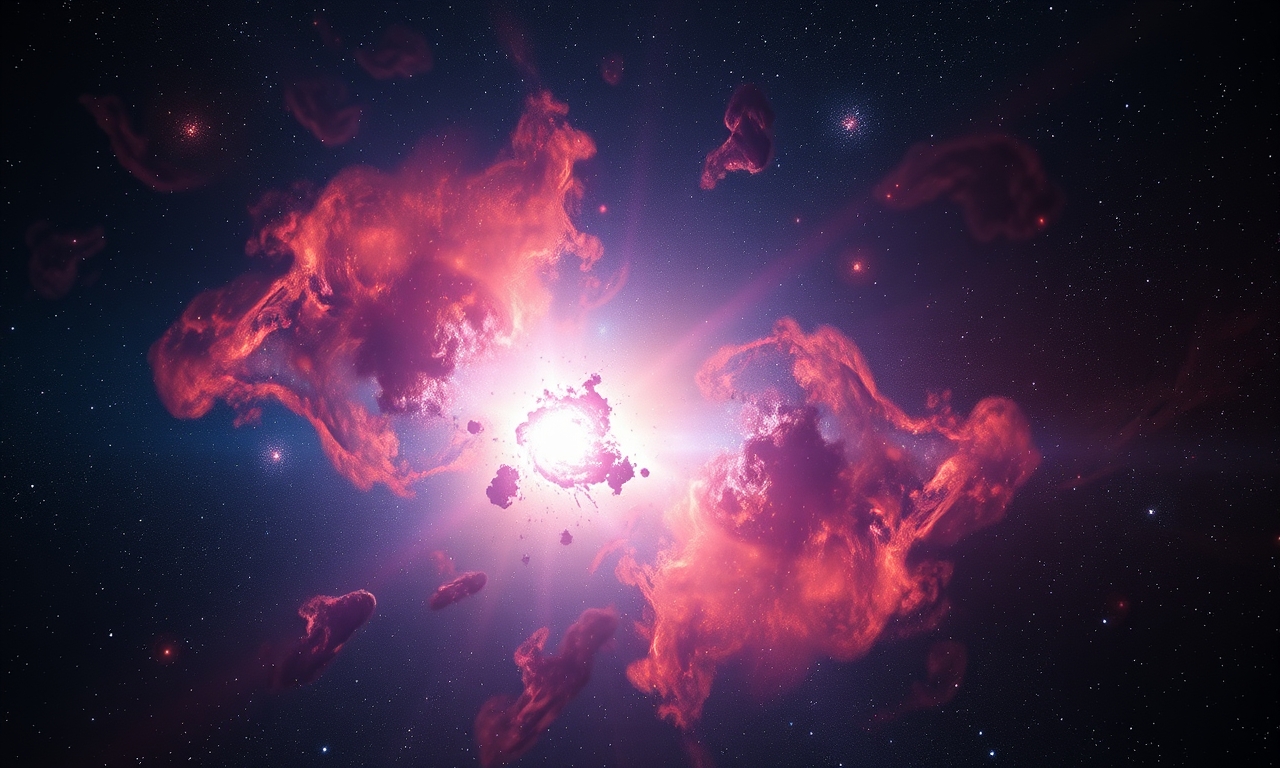
About twenty‑five years ago a star in the constellation Puppis erupted, ejecting its outer layers and then becoming hidden behind a thick cocoon of its own dust.
The ejecta contained no detectable hydrogen, which is highly unusual because hydrogen is the most abundant element in the cosmos. This absence challenged existing models of stellar explosions for years.
Recently the dust has thinned enough to reveal the central source: a white dwarf that is steadily siphoning material from a rare helium‑rich companion. The system resembles a classical nova, but its chemical signature is distinct.
Observers also identified fast‑moving clumps of gas racing outward at roughly twenty million miles per hour, a velocity never before seen in any known nova.
The engine driving these high‑speed outflows remains unclear. Scientists are analysing spectroscopic data and planning further observations to uncover the physical processes behind the phenomenon.