Background
The chemical state of a rocky planet’s mantle influences melting temperatures, volcanic gas composition and, ultimately, surface conditions. A key factor is how iron is incorporated into minerals during the planet’s earliest molten phase.
Magma‑ocean phase and iron oxidation
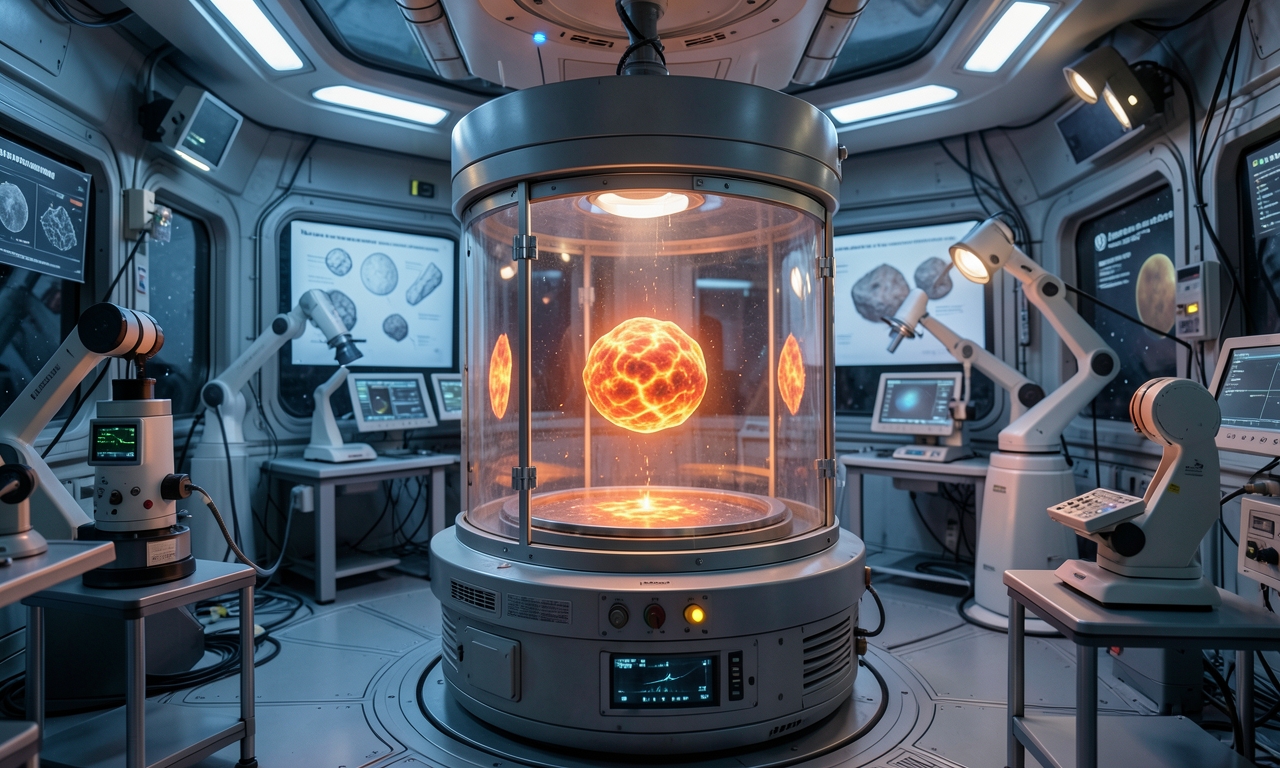
In the first hundred million years after formation, Earth and Mars are thought to have been covered by global magma oceans—vast layers of liquid silicate. Within this melt, iron can exist as Fe²⁺ or Fe³⁺, and the prevailing redox environment determines which oxidation state is incorporated into crystallising minerals. Recent work suggests that highly oxidising conditions favour the formation of the high‑pressure mineral majorite, which specifically incorporates ferric iron (Fe³⁺).
Implications for mantle evolution
Majorite is stable only under the extreme pressures and temperatures of a deep mantle. When the magma ocean solidified, a fraction of ferric iron became trapped in this phase, altering the overall redox balance of the mantle. An oxidised mantle raises silicate melting points, modifies volcanic gas outputs and can have long‑term effects on surface climate.
Consequences for Earth and Mars
On Earth, sequestration of ferric iron in majorite may have contributed to a gradual decline in volcanic activity and to a more stable atmospheric composition. On Mars, a comparable process could help explain the planet’s thin, CO₂‑dominated atmosphere and the lack of extensive recent tectonics.
Future work
Laboratory experiments and high‑resolution numerical models are planned to assess how widespread majorite formation was in early mantles and to quantify the role of redox conditions in planetary evolution.