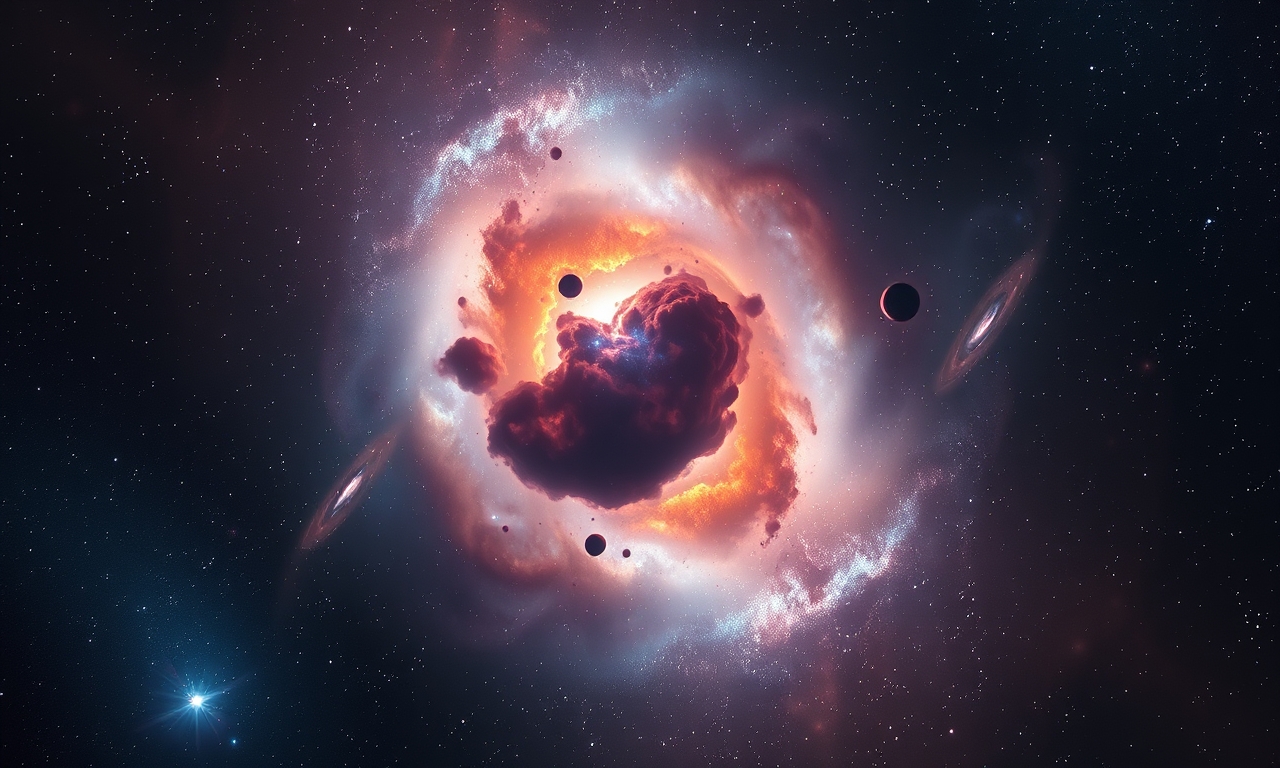
A fresh view of Centaurus A's nucleus
To mark the fourth scientific anniversary of the James Webb Space Telescope (JWST), NASA has released striking infrared observations of the well‑known galaxy Centaurus A. The data penetrate the thick dust lanes that obscure the galaxy’s centre in visible light, unveiling a tightly woven tapestry of individual stars and dynamic structures.
JWST’s observational capabilities
The telescope’s exceptional sensitivity across near‑ and mid‑infrared wavelengths allows it to capture radiation invisible to conventional observatories. These results exceed the original performance expectations for the observatory.
Evidence of a past galactic merger
The images confirm that Centaurus A experienced a collision with a smaller galaxy about two billion years ago. The ensuing flow of dust and gas reshaped the central bulge, creating a complex network of star‑forming regions and an active galactic nucleus.
Implications for astrophysics
By peering through the dust, researchers can now study the stellar populations in the core with greater precision and trace the dynamics of the merger event. The findings also provide valuable benchmarks for models of galaxy evolution in the early universe.
Future prospects
The successful fourth year of JWST operations not only demonstrates the instrument’s durability but also opens new avenues for probing obscured structures in other dust‑rich galaxies.