Webb Telescope Observations
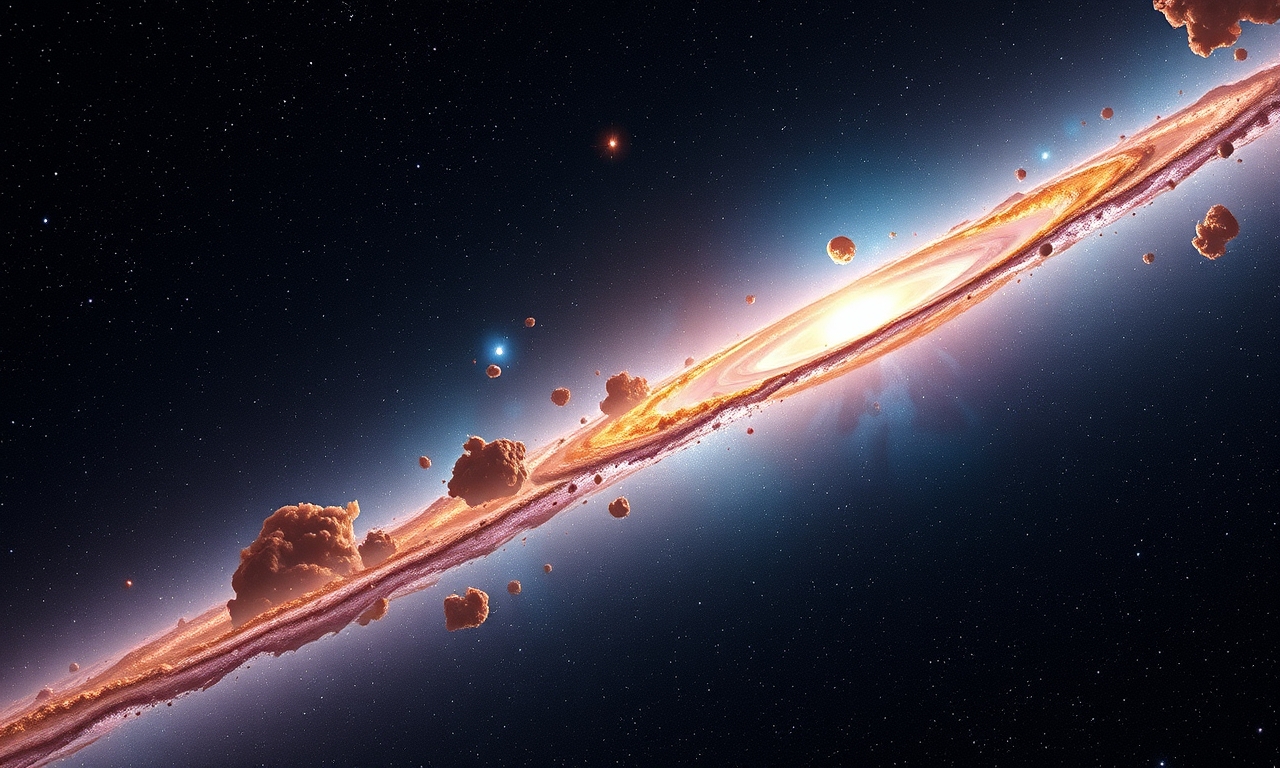
On July 6, 2026, the Mid-Infrared Instrument (MIRI) aboard NASA's James Webb Space Telescope captured a detailed view of the galaxy Centaurus A. The image reveals the inner workings of this unusual starburst system in mid‑infrared light.
Located roughly 13 million light‑years away, Centaurus A is famous for its prominent dust lane and an active galactic nucleus. MIRI’s sensitivity allows astronomers to map the distribution of cold dust and regions of recent star formation.
The observations expose delicate structures that were previously hidden in visible wavelengths. Prominent dust concentrations indicate possible sites where new stars are being born.
Furthermore, the data hint at energetic processes linked to the central black hole. Radiation and outflows from this compact object affect the surrounding interstellar medium.
The high spatial resolution and sensitivity of MIRI in the mid‑infrared range make it an ideal tool for studying such complex, dust‑enshrouded galaxies.