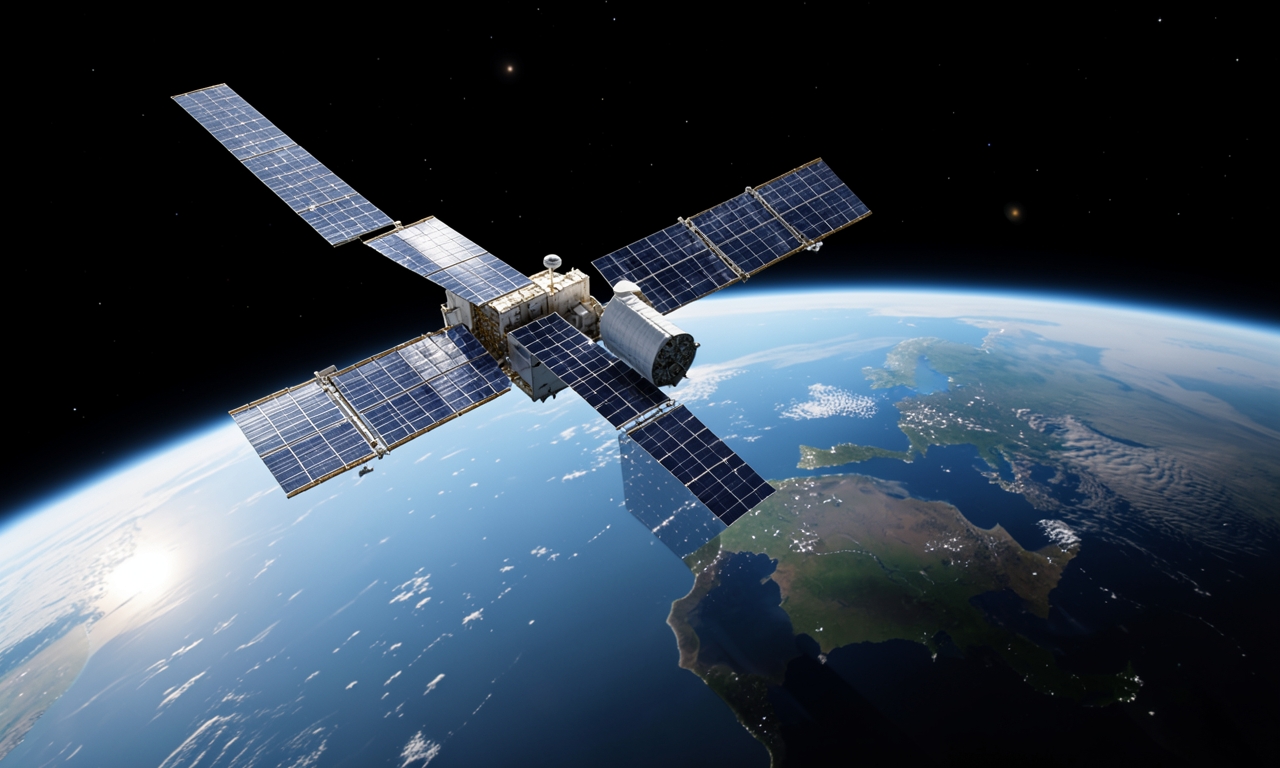
A mounting challenge in low Earth orbit
Since the early days of space exploration, the amount of artificial material surrounding Earth has risen sharply. Current estimates place the total mass of orbital debris at roughly 13,000 tonnes, comprising spent rocket stages, defunct satellites and countless smaller fragments. This accumulation poses an increasing collision risk for operational spacecraft.
Present satellite landscape
Seventy years after the Moon was the sole natural body orbiting Earth, more than 15,000 active satellites now populate the region. Approximately two‑thirds of these are owned by SpaceX, the leading private launch provider. Its founder, the world’s first trillion‑dollar entrepreneur, intends to expand the fleet dramatically.
Planned megaconstellation
The upcoming expansion envisions launching about one million additional satellites. Each unit would measure roughly 70 meters in length and 20 meters in width, together forming a vast data‑center constellation in space. The goal is to deliver global broadband connectivity and a comprehensive communications network.
Potential debris‑removal techniques
- Active capture using robotic arms or nets deployed from service spacecraft.
- Ground‑based laser systems that impart momentum to debris, guiding it into the atmosphere.
- Designing satellites with end‑of‑life deorbit modules for controlled re‑entry.
Future outlook
International bodies are drafting regulations to limit new launches and extend satellite lifespans. Without coordinated action, the growing debris cloud could jeopardize the sustainable use of near‑Earth space.