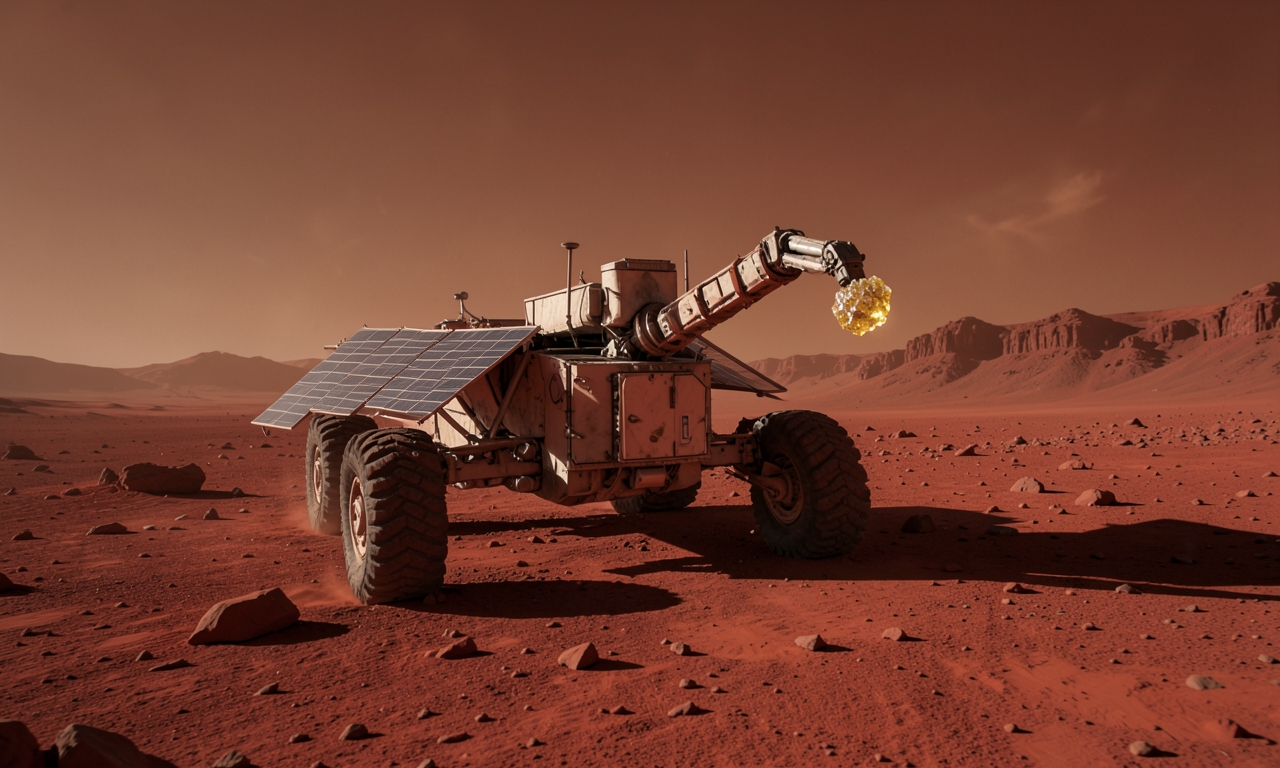
First Close‑up View of Sulfur on the Red Planet
NASA's Curiosity rover, operating in Gale Crater, has recorded high‑resolution images of crystalline sulfur fragments. The photographs reveal distinct, prism‑like structures, marking the inaugural direct observation of sulfur crystals on Mars.
The images were captured using the rover's Mast Camera (Mastcam), which provides detailed visual data for mineralogical analysis. The crystals appear in a pale yellow‑white hue with well‑defined angular edges characteristic of elemental sulfur.
Researchers from the Mars Science Laboratory team suggest that the crystals likely formed through past volcanic outgassing or chemical precipitation processes. Such mechanisms may have contributed to transient habitable conditions in Mars' geological history.
- The crystals were located in a layer roughly 10 cm beneath the surface.
- Spectral signatures from the Mastcam confirm the material as elemental sulfur.
- This finding complements earlier detections of sulfates that indicate historic water activity.
The discovery will be detailed in an upcoming planetary geology journal article and provides fresh context for future missions aimed at assessing past water presence and potential habitability on Mars.