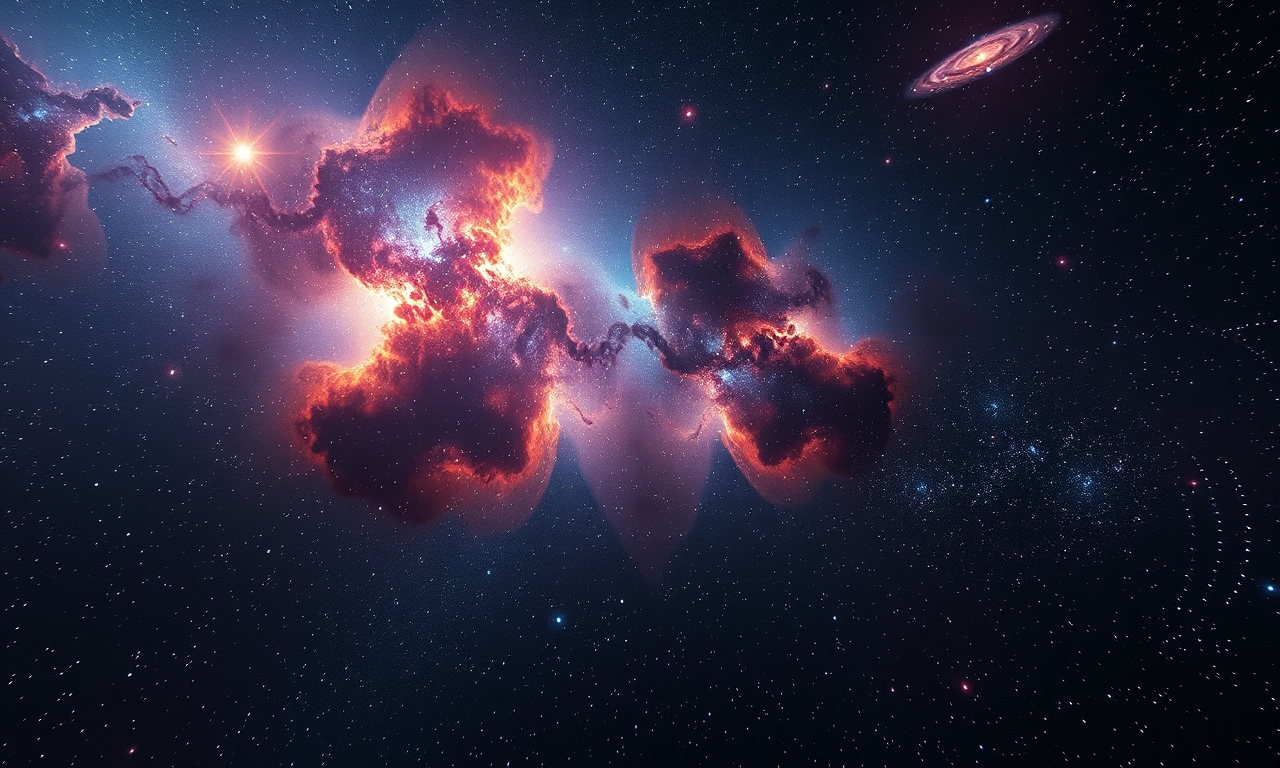
A unprecedented view of the Milky Way
Three years after its launch, ESA’s Euclid telescope has produced an unmatched image of the Galaxy’s centre. In just 26 hours of observation, thousands of individual exposures were stitched together, forming a mosaic that contains tens of millions of stars.
More than a star field
The picture serves scientific purposes beyond its visual impact. It acts as a map of stellar evolution, spanning from dark molecular clouds where new stars form to the ancient, densely packed populations of the galactic bulge.
Hidden worlds revealed by microlensing
Within this dense field of light, countless planets remain invisible to direct detection. Astronomers employ gravitational microlensing, measuring brief brightening events when a foreground star – often accompanied by a planet – passes in front of a background star. The resulting light curves allow the identification of planets and even estimates of their masses, solely via gravitational effects.
Euclid’s expanding role
Originally built to probe dark matter and dark energy, Euclid now opens a new window on our own Galaxy. Its combination of wide‑field imaging and precise photometry makes it a powerful tool for both cosmology and the study of exoplanet demographics within the Milky Way.
Future prospects
Preliminary analyses suggest that thousands of previously unknown planets may reside in the surveyed region. Ongoing data processing will refine these statistics and improve our understanding of planetary distribution across the inner Galaxy.