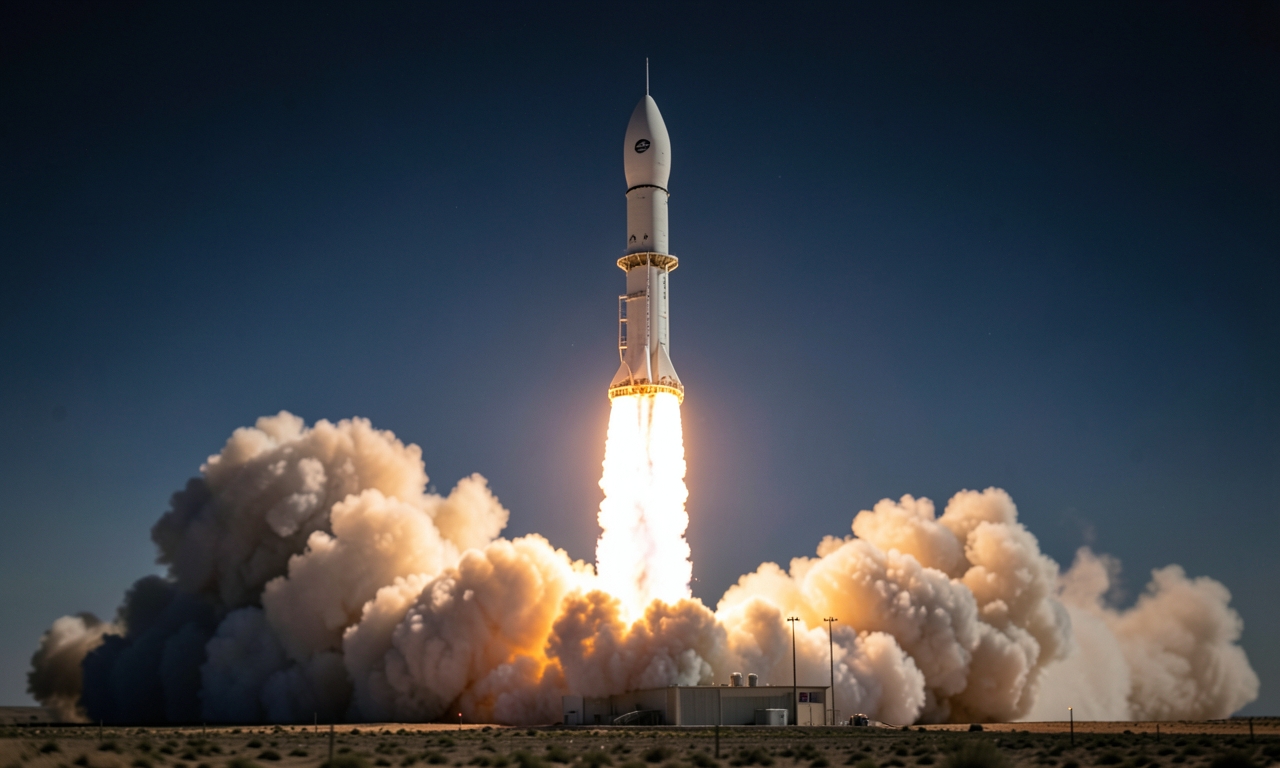
Launch of the MESSENGER Mission
On August 3, 2004, NASA lifted the MESSENGER spacecraft from Launch Complex 17B at Cape Canaveral aboard a Delta II rocket, setting course for the Solar System's innermost planet.
Scientific Objectives
The mission aimed to achieve the first orbit around Mercury to study its geology, composition, magnetic field and surface in detail, with a special focus on detecting water ice in permanently shadowed craters near the poles.
Spacecraft and Flight Path
Built by the Johns Hopkins University Applied Physics Laboratory, MESSENGER carried seven instruments, including spectrometers, a magnetometer and a camera system. Before orbit insertion, the probe performed several gravity‑assist flybys of Earth, Venus and Mercury to reduce its velocity.
Results and Conclusion
After entering orbit in March 2011, MESSENGER returned comprehensive data, confirmed the presence of water ice and mapped nearly the entire surface. The mission concluded on April 30, 2015 with a controlled impact on Mercury, leaving a legacy that informs future exploration of the planet.