SpaceX

NASA assigns SunRISE mission to SpaceX Falcon Heavy instead of ULA Vulcan Centaur

1 min read
NASA assigns SunRISE mission to SpaceX Falcon Heavy instead of ULA Vulcan Centaur
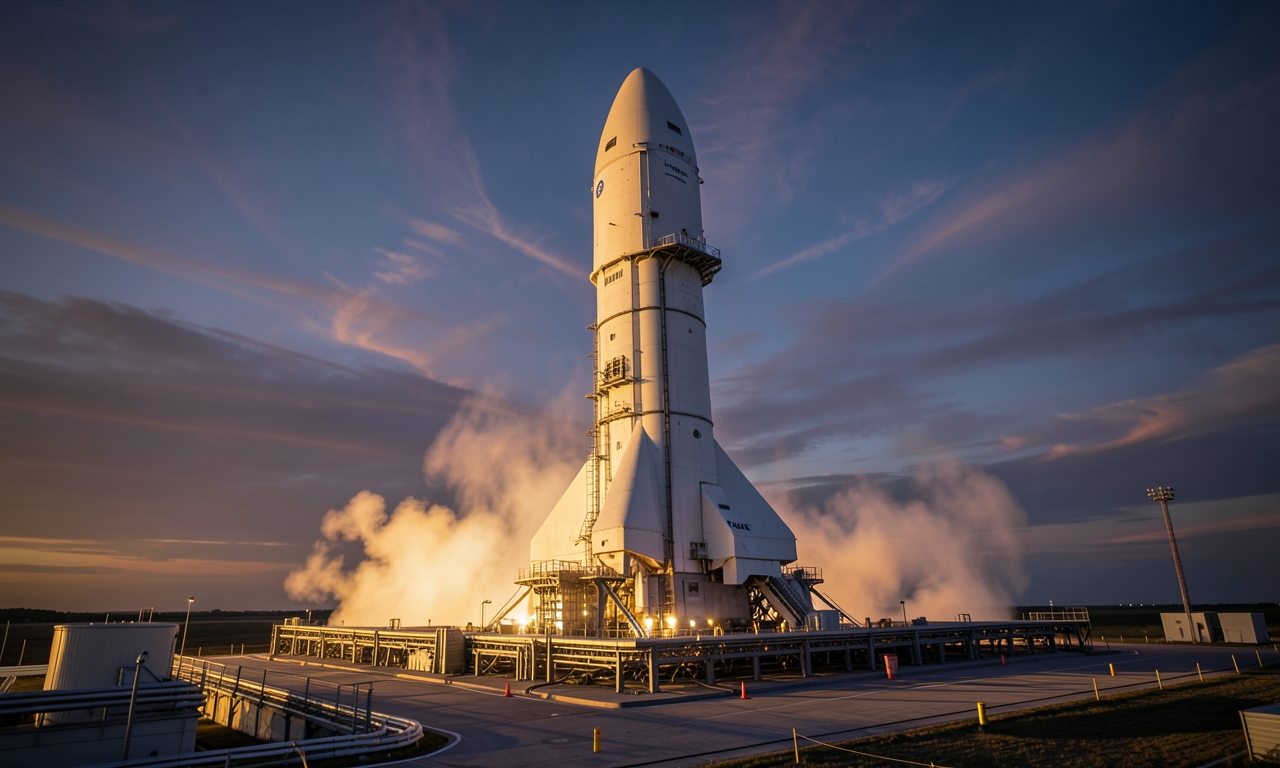
AI-generated illustration
This article was produced with AI assistance and editorially curated from public sources.

NASA has changed the launch plans for the SunRISE mission, replacing the originally intended United Launch Alliance Vulcan Centaur with a SpaceX Falcon Heavy rocket.

The SunRISE (Sun Radio Interferometer Space Experiment) mission comprises a constellation of small satellites designed to study solar eruptions and their impact on space weather. Initially slated for launch on a Vulcan Centaur, the mission was reassessed due to scheduling and availability considerations.

The Falcon Heavy provides substantial lift capability and has a proven flight record, making it suitable for deploying the multiple SunRISE satellites into their intended high Earth orbit.

This change does not alter the scientific objectives of the mission. The satellites will continue to collect data on solar activity to improve space weather forecasting, with a launch now targeted for 2026.

Frequently asked questions

Warum hat NASA den Trägerraketenwechsel vorgenommen?

Die Entscheidung beruht auf einer Neubewertung von Verfügbarkeit und Zeitplan des ursprünglich geplanten Vulcan Centaur.

Welche Vorteile bietet die Falcon Heavy für die SunRISE-Mission?

Sie liefert hohe Nutzlastkapazität und hat eine erfolgreiche Fluggeschichte, wodurch sie den Satellitenkonstellation startgerecht platzieren kann.

Bleibt das wissenschaftliche Ziel der Mission trotz Wechsel des Trägers erhalten?

Ja, die Mission wird weiterhin Sonnenausbrüche untersuchen und Daten zum Weltraumwetter liefern.