Efficient Gas Supply During Cosmic Noon
Roughly two to three billion years following the Big Bang, the universe experienced its most intense period of star production, an interval often called cosmic noon. At that time, the pace of stellar birth exceeded present levels by as much as a factor of one hundred. Such extraordinary output required that raw gas be moved through galactic systems with great effectiveness.
- Cosmic noon occurred 2–3 billion years after the Big Bang
- Star formation rate then up to 100 times today's value
- Galaxies depended on efficient internal gas flow
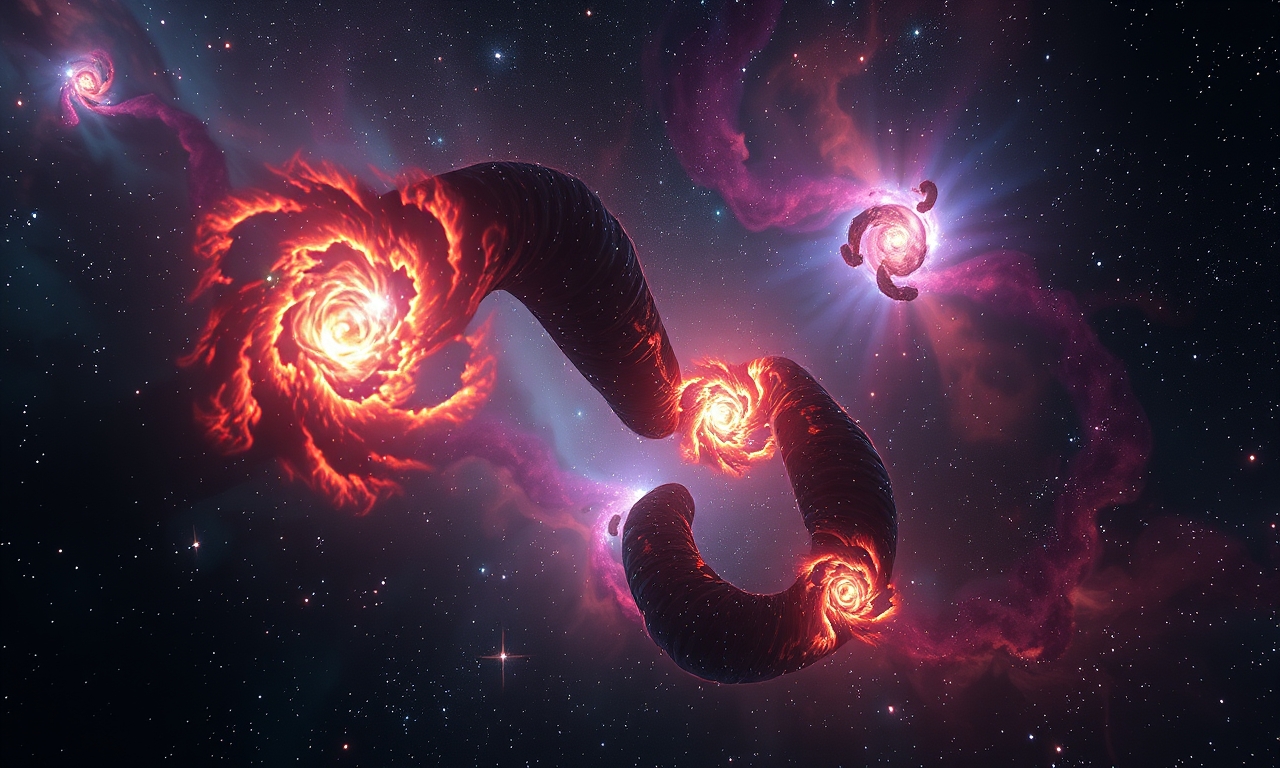
Current analysis indicates that the prominent spiral arms and central bar features of galaxies behave like pumps. They guide cold gas from outer regions into the dense cores where it collapses into new stars. In their absence, the building material could not have reached the necessary locations swiftly enough to sustain the observed activity.
The finding sheds light on the stark contrast between past and present star formation. Modern galaxies frequently show fainter spirals or less defined bars, which may account for the lowered global rate. Additional surveys of distant systems are planned to verify the pumping role of these structures in finer detail.