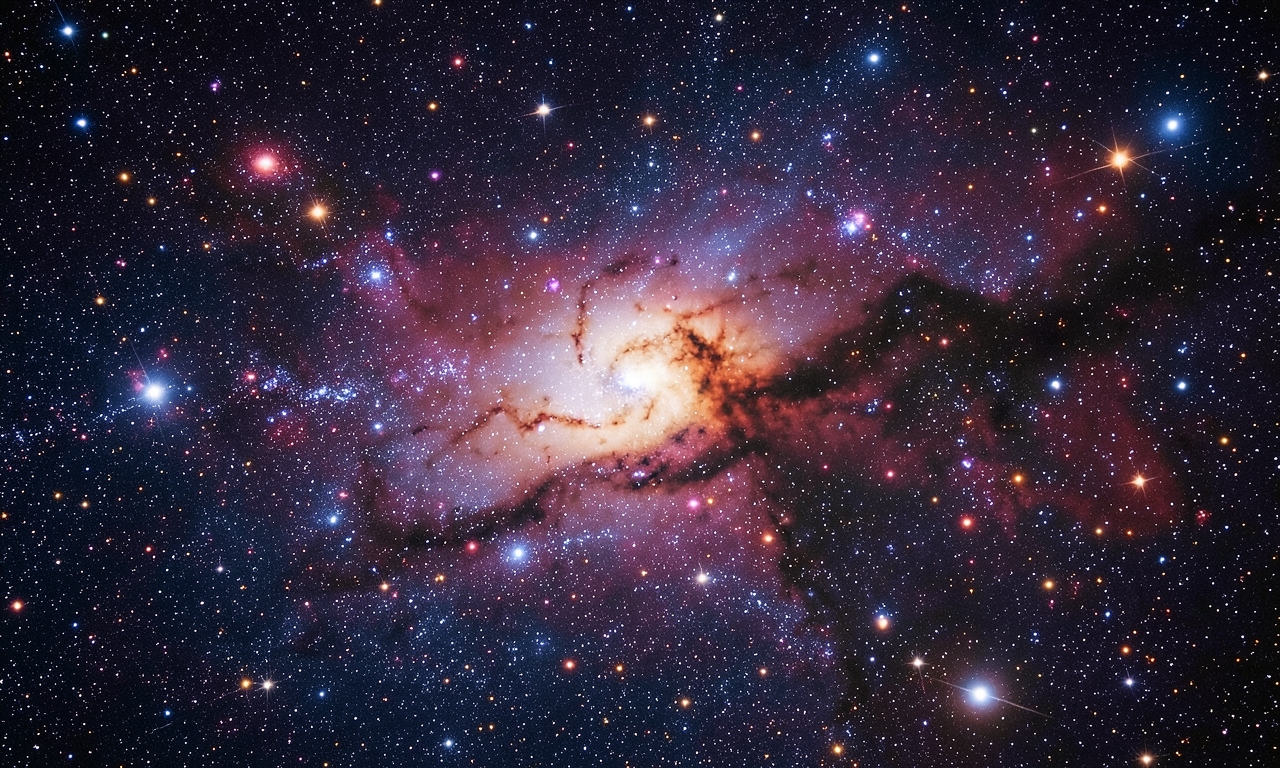
Observations Shed Light on Cosmic Fuel Supply
Using the James Webb Space Telescope (JWST), researchers have obtained unprecedented views of the process by which supermassive black holes at the hearts of galaxies acquire their matter. The recorded images reveal streams of gas that connect a galaxy's hot outer atmosphere to the spinning disk of material near the center, where the black hole draws in matter.
The observed filaments appear to act as a conduit, channeling gas from the wider galactic environment toward the core. Such a connection had not been captured with this level of clarity before, as ground-based and earlier space instruments lacked the required sensitivity in infrared wavelengths.
Relevance for Astrophysics
The findings mark progress in understanding the growth of active galactic nuclei. Because supermassive black holes shape the evolution and emission of their host galaxies, clarifying how they are supplied with fuel helps refine models of cosmic structure formation.
- JWST provided the sharpest images to date of the gas bridges
- The filaments link hot galactic atmosphere and central gas disk
- Results support theories of matter delivery to black holes
Additional studies with the telescope are planned to determine the dynamics and composition of the filaments more precisely. Astronomical institutions are currently analyzing the data under ongoing observation programs.