Discovery of unusually light gas giants
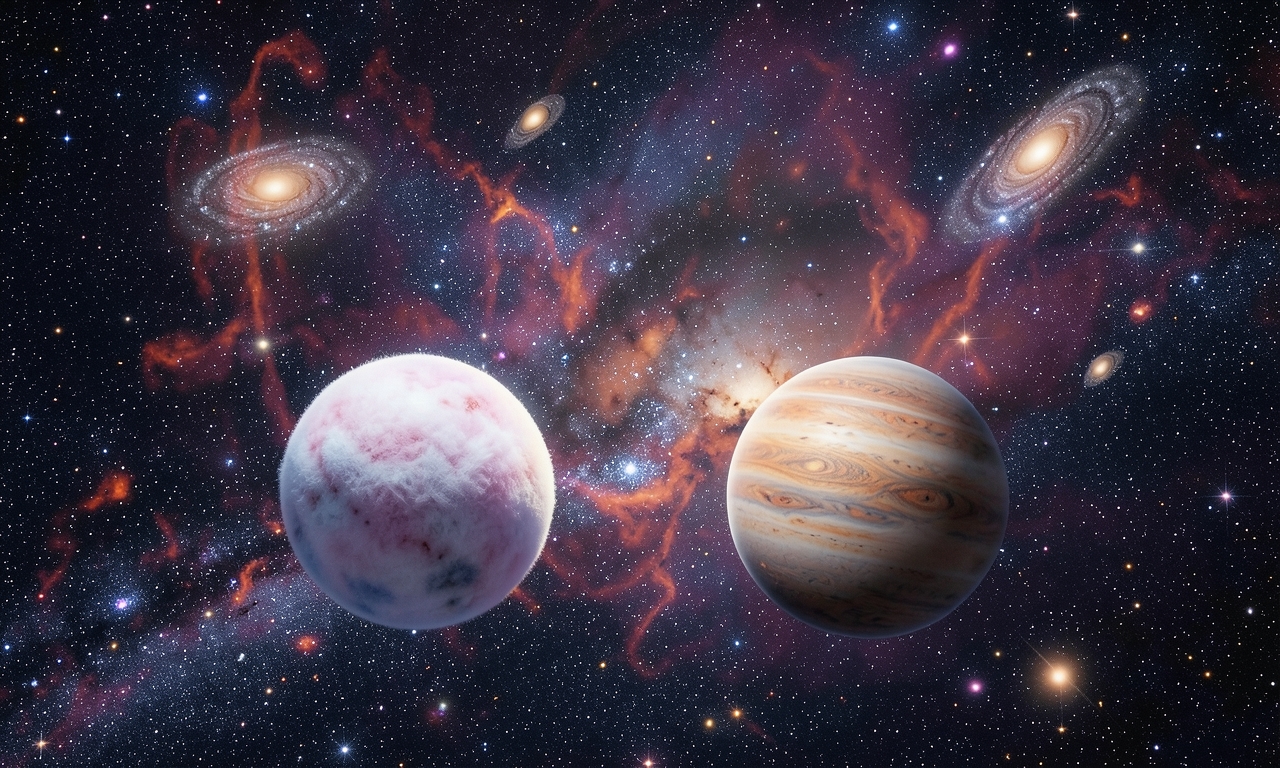
An international team of astronomers has detected two exoplanets orbiting the same star that exhibit an exceptionally low density. Although their masses are comparable to that of Neptune, their volumes are much larger, resulting in an average density below that of cotton candy.
Characteristics of the "super‑puff" planets
Both bodies fall into the category of "super‑puff" exoplanets, where a very tenuous atmospheric envelope dilutes the overall mass. Despite their low density, they maintain stable orbits around their host star, raising questions about their formation and long‑term stability.
Implications for planetary formation theory
The findings provide new constraints for models of gas‑giant formation. The combination of large size and low mass challenges conventional theories that predict denser compositions for giant planets.
Future observations
Planned follow‑up studies, such as transit spectroscopy, aim to determine the chemical makeup of the planets' atmospheres. Understanding whether they consist primarily of light gases like hydrogen and helium, or if additional processes such as intense stellar radiation are involved, will be key to interpreting these objects."